“Loneliness, I began to realise, was a populated place: a city in itself. And when one inhabits a city, even a city as rigorously and logically constructed as Manhattan, one starts by getting lost”
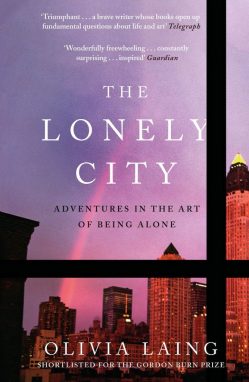
When Olivia Laing moved to New York City in her mid-thirties, she found herself inhabiting loneliness on a daily basis. Fascinated by this most shameful of experiences, she began to explore the lonely city by way of art. Moving fluidly between works and lives – from Hopper’s Nighthawks to Warhol’s Time Capsules, from Henry Darger’s hoarding to David Wojnarowicz’s AIDS activism – Laing conducts an electric, dazzling investigation into what it means to be alone.
“Loneliness is personal, and it is also political. Loneliness is collective; it is a city. As to how to inhabit it, there are no rules and nor is there any need to feel shame, only to remember that the pursuit of individual happiness does not trump or excuse our obligations to each another. We are in this together, this accumulation of scars, this world of objects, this physical and temporary heaven that so often takes on the countenance of hell. What matters is kindness; what matters is solidarity. What matters is staying alert, staying open, because if we know anything from what has gone before us, it is that the time for feeling will not last.”
About the feeling many of us will know or recognise, that of being the individual, the citizen or the inhabitant, and seeking connection with the city, with that larger Ecosystem City®, Laing formulates precise:
“Imagine standing by a window at night, on the sixth or seventeenth or forty-third floor of a building. The city reveals itself as a set of cells, a hundred thousand windows, some darkened and some flooded with green or white or golden light. Inside, strangers swim to and fro, attending to the business of their private hours. You can see them, but you can’t reach them, and so this commonplace urban phenomenon, available in any city of the world on any night, conveys to even the most social a tremor of loneliness, its uneasy combination of separation and exposure.”
Humane, provocative and moving, The Lonely City is a celebration of a strange and lovely state, adrift from the larger continent of human experience, but intrinsic to the very act of being alive. Read more at Canongate Books.
Bibliography
Laing, Olivia (2016) The Lonely City: Adventures in the heart of being alone. Edinburgh: Canongate Books Ltd.
Rise of the DEO: Leadership by design

Cover picture Rise of the DEO.
“This book identifies and explores the qualities of a new breed of leaders. The book lays out–graphically and through example–how DEO’s run their companies and why this approach makes sense today. We help readers identify skills in themselves and their colleagues, and we guide them in using these skills to build, revive, or reinvent the next generation of great companies and organizations. Leaders who understand the transformative power of design and embrace its traits and tenets can command in times of change. We call these leaders DEO’s and they are our new heroes.”
– Maria Giudice and Christopher Ireland.
Giudice and Ireland bring forward six characteristics of a DEO, which are brought forward many times in books of leadership but in this book placed in a new surprising context. DEO’s are:
-
- Change agents: not troubled by change.
- Socially Intelligent: high social intelligence.
- System thinkers: systems thinkers who understand the interconnectedness of their world.
- Intuitive: highly intuitive, either by nature or through experience.
- Risk takers: embrace risk as an inherent part of life and a key ingredient of creativity.
- GSD: “gets shit done.” (i.e. they make things happen).
“Businesses and governments have discovered the power of a creative mind to effect change and produce value. Experts note that CEO’s who possess a design sensibility—or trust others who do—are best suited to thrive in a changing world. Yet not until Rise of the DEO has anyone captured the true potential of a design-oriented thinker at the highest level of an organization. Maria Giudice and Christopher Ireland have written a seminal work that will transform the role of the designer and the pace of innovation. This book is a must read.”
– Richard Grefé, executive director of AIGA.
Listen to an interview (by Debbie Millman) with Maria Giudice or at Women talk design.
Bibliography
Giudice, M. and C. Ireland (2013) Rise of the DEO: Leadership by Design (Voices That Matter).
Back to the drawing table
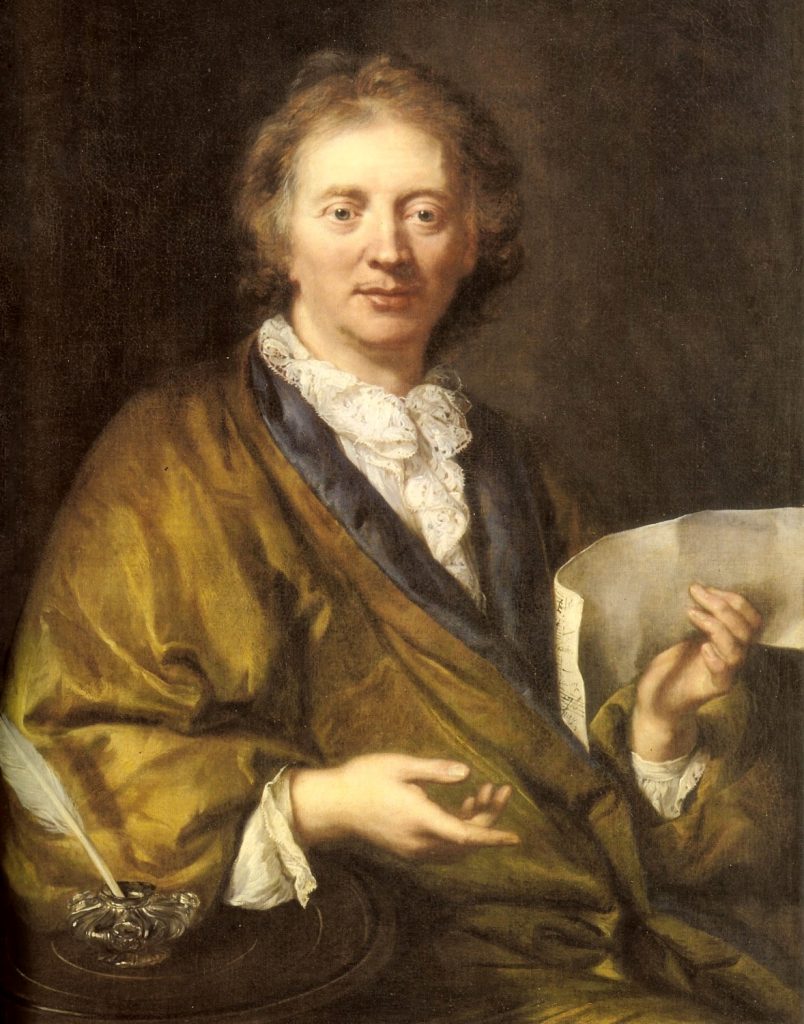
Reading the Global Risks Report 2020 of the World Economic Forum last week and quietly listening to all the presentations, I went back to my trusted base, platform, home… the piano, with François Couperin. On this late winter afternoon I imagined that my left hand played the system world and my right the living world. Les ombres errantes is actually as it should be.
With this architectural masterpiece in mind we should go back to the drawing table and redesign how we, the world, manage ourselves to a new harmony, with full respect for all other species and natural ecosystems from which we developed. Mother Earth, our root system.
Børge Brende, President, World Economic Forum: ”On the environment, we note with grave concern the consequences of continued environmental degradation, including the record pace of species decline. Respondents to our Global Risks Perception Survey are also sounding the alarm, ranking climate change and related environmental issues as the top five risks in terms of likelihood—the first time in the survey’s history that one category has occupied all five of the top spots.”
How can we forget? We can not continue this way! The report has a huge impact on me, that I know. François gives me a moment of relaxation, and by this of inspiration to rethink, to reflect, to re-prepare, to re-energize, to re-create, to re-select, to re-elect and to re-mark. Left and right hand as one, connecting ratio and creativity. Back to the drawing table.
“By not owing things you are not owned by things”
Een voornemen voor 2020: “By not owing things you are not owned by things.”
 Kruf Huyssons 'Schetsboek'