The Mind of a Bee

Lars Chittka | 2022

Most of us know the hive mind—the power of bees as a fantastic collective. But do we know how uniquely intelligent bees are as individuals?

In The Mind of a Bee, scientist and author Lars Chittka draws from decades of research, including his pioneering work, to argue that bees have remarkable cognitive abilities. He shows they are profoundly smart, have distinct personalities, can recognize flowers and human faces, exhibit basic emotions, count, use simple tools, solve problems, and learn by observing others. They may even possess consciousness.

This image has an empty alt attribute; its file name is 9780691236247.jpg.webp

Taking readers deep into the sensory world of bees, Chittka illustrates how bee brains are unparalleled in the animal kingdom for the sophistication packed into their tiny nervous systems. He looks at their innate behaviours and how their evolution as foragers may have contributed to their keen spatial memory. Chittka also examines the psychological differences between bees and humans, as well as the ethical dilemmas that arise in conservation and laboratory settings because bees feel and think. Throughout, he touches on the fascinating history behind studying bee behaviour.

Lees verder “The Mind of a Bee”
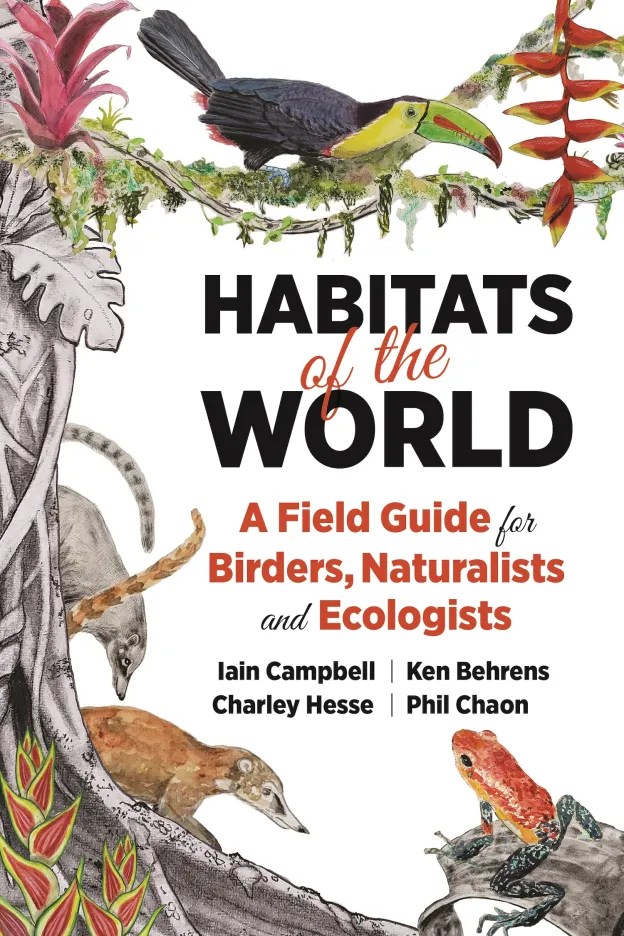
Habitats of the World

A Field Guide for Birders, Naturalists, and Ecologists

Iain Campbell, Ken Behrens, Charley Hesse, and Phil Chaon | Princeton University Press

Accurately identifying and understanding habitats in detail is essential to any birder, naturalist, outdoor enthusiast, or ecologist who wants to get the most out of their experiences in the field. Habitats of the World is the first field guide to the world’s major land habitats—189.

Using the format of a natural history field guide, this compact, accessible, and comprehensive book features concise identification descriptions. It is richly illustrated—including more than 650 colour photographs of habitats and their wildlife, 150 distribution maps, 200 diagrams, and 150 silhouettes depicting each habitat alongside a human figure, providing an immediate grasp of its look and scale.

Lees verder “Habitats of the World”

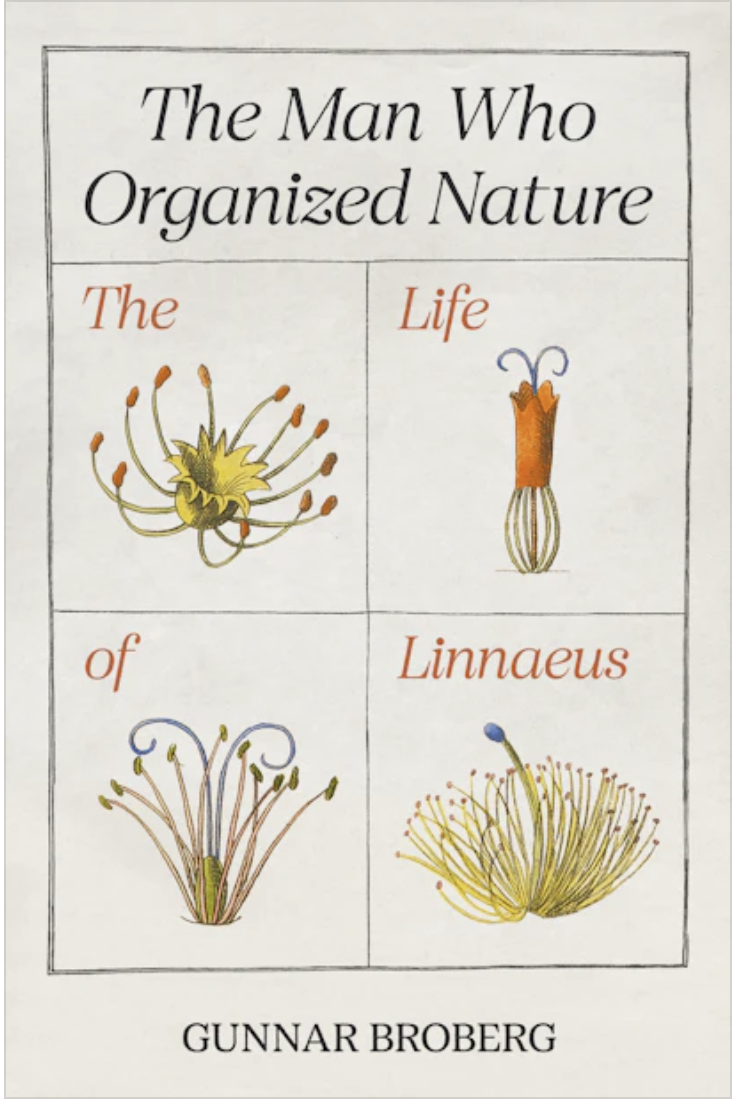
The Man Who Organized Nature

The Life of Linnaeus

Gunnar Broberg (translation Anna Paterson)| 2023, Princeton University Press

A new biography offers a vivid portrait of Linnaeus’s life and work. Carl Linnaeus (1707–1778), the father of modern biological taxonomy, formalised and popularised the system of binomial nomenclature used to classify plants and animals. 


Linnaeus himself classified thousands of species; the simple and immediately recognisable abbreviation “L” is used to mark his classifications.

Lees verder “The Man Who Organized Nature”

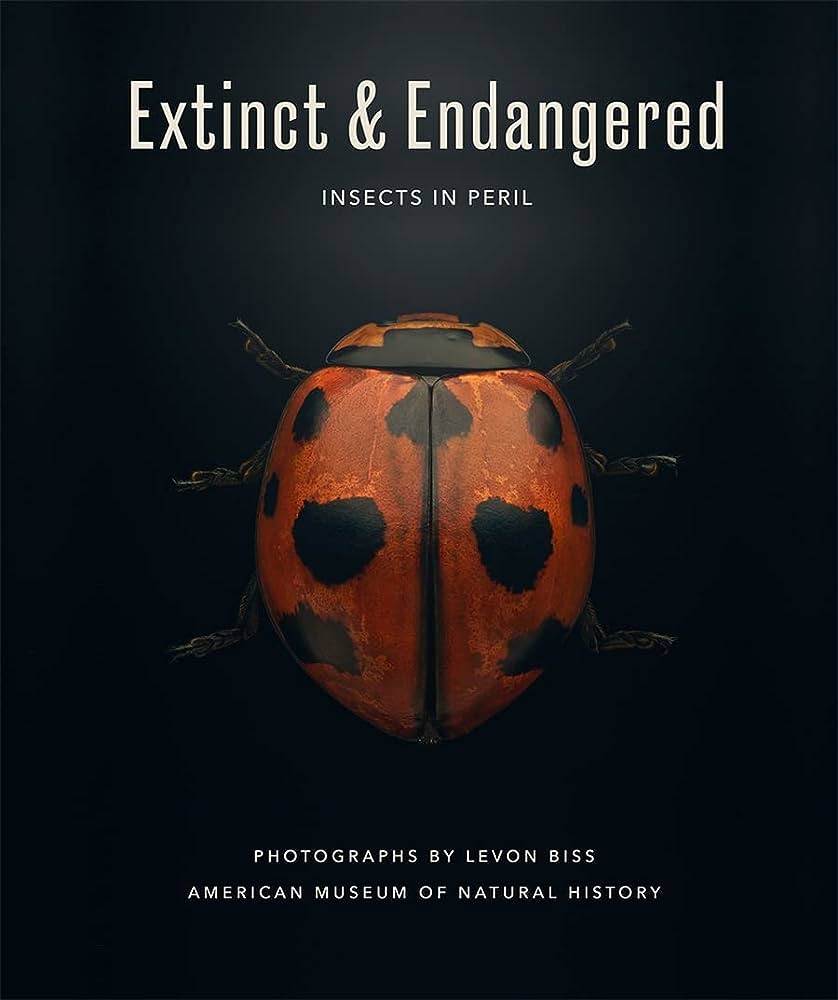
Extinct & Endangered

Insects in Peril

Levon Biss and American Museum of Natural History | 2022, Harry Abrams

Pay attention to insects. Many pollinate plants. Some recycle plant and animal matter into the soil. They are food for countless other living things—and for one another, often keeping pest populations in check. Whether beetles, bees or butterflies, insects help natural ecosystems stay healthy.

But the evidence is clear: many insect species are in decline. The ones featured here are vulnerable, imperilled—or have already disappeared—and human changes to the land and climate are primary reasons.

Lees verder “Extinct & Endangered”

Aristotle and ecology

M. D. Usher | Princeton University Press

“When zoologist Ernst Haeckel (1834–1919) coined the word ecology in 1866 he defined it as “the relation of the animal to its organic and inorganic environment.” But did he coin it? Aristotle, arguably the world’s first zoologist, gave a tantalizing preview of the idea in Parts of Animals, written around 350 BCE.

Aristotle urges us to study animals closely for what they reveal about the larger world around us, including ourselves, for, as he puts it, “Nature does nothing in vain,” and “in all of Nature there is something wonderful.” His insistence that scientific investigation should always be concerned with systemic wholes is particularly inspired”

Bibliography

Usher, M. (2023) Aristotle and ecology. Princeton, US: Princeton University Press.