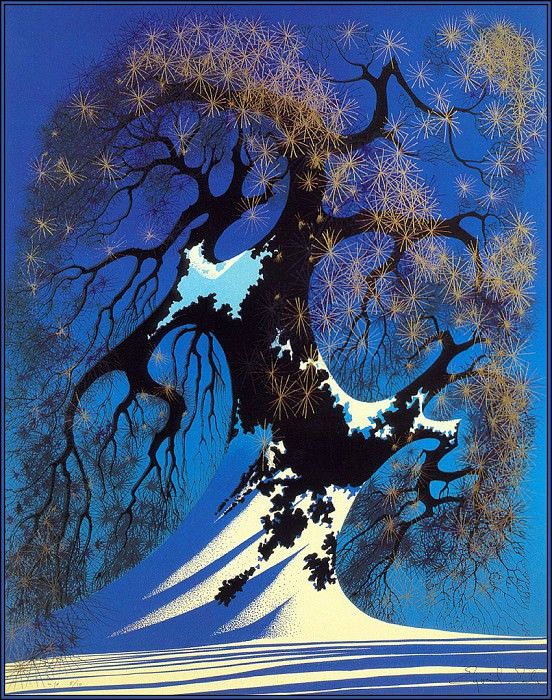
‘Winter Bonsai’ door Eyvind Earle
‘Winter Bonsai’ door Eyvind Earle
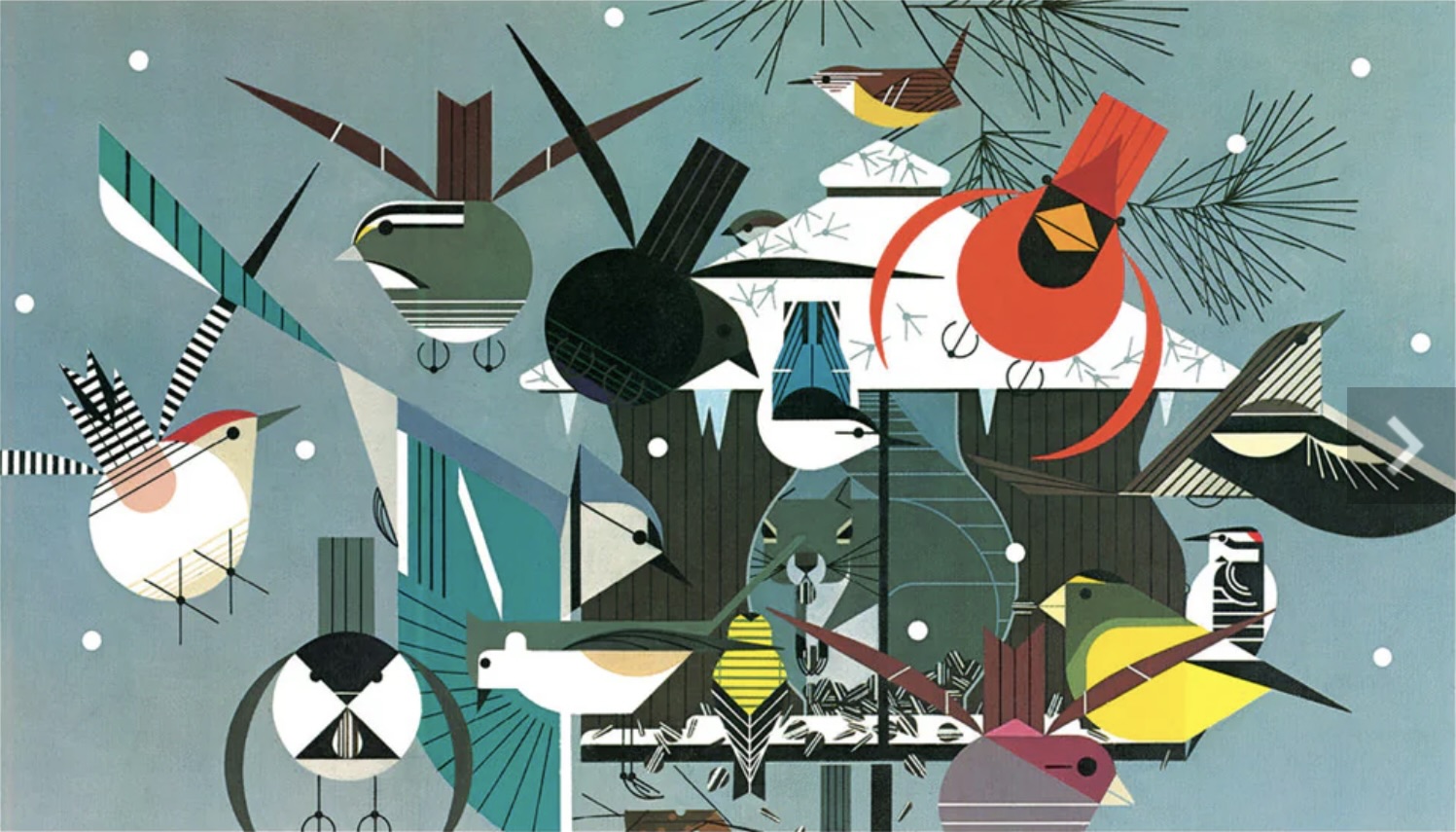
Winter Holiday Card by Charley Harper (1922 – 2007)
Charley Harper is an exceptional modern artist who dedicated his paintings to the essence of wildlife. This card shows a selection of the biodiversity of animals that have to find their way in the winter forest when food is not that abundant anymore.
Survival comes with preparation, adaptation, and innovative thinking when needed. Behaviour and personal treats are key. It’s not so different from the present human world. Well, what can we learn from life in the forest? Or did we forget about it?
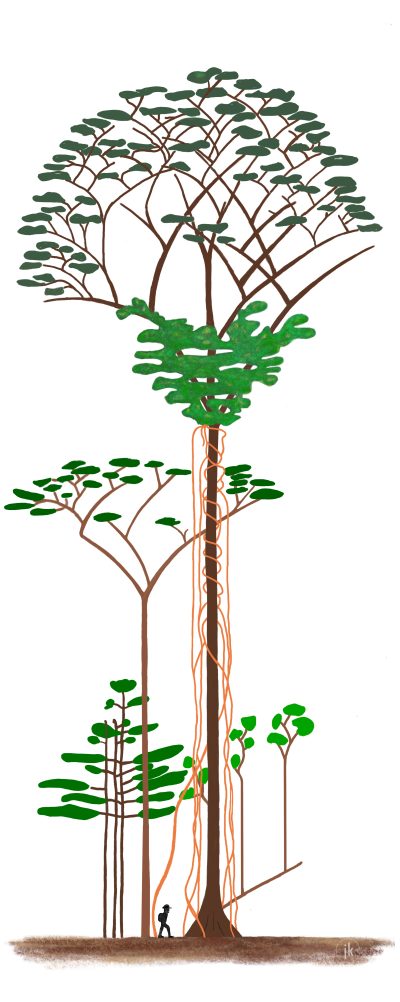


The impressive dissertation of Roelof Oldeman (1974, summa cum laude) shows the natural forest’s complexity, dynamics and beauty. Oldeman combined morphogenetic, ecological and physiological concepts, allowing the structural analysis of the populations of trees to explain and understand the forest.
This (holistic) combination of sciences is also needed to understand the ecosystem society and its (public) governance. Now, this scientific landscape is scattered and segmented. Can public administration and corporate governance sciences learn from the forest approach?
Source: Oldeman (1974) part of fig 42. – Profil d’une parcelle de forêt d’environ 30 X 40 m dans la region de Saül, à une altitude de 285 m
This design is a personal redraw and colouring exercise by me as one of his students. I call it Forestia oldemanii. An ode to my teacher and dear friend.
Bibliography
Kruf, J. (2023) Forestia oldemanii [fine art print]. Breda: Private collection.
Oldeman, R.A.A. (1974, 2nd ed.). L’architecture de la forêt guyanaise. Mémoires ORSTOM, 73.

