Natural Magic

Emily Dickinson, Charles Darwin, and the Dawn of Modern Science

Renée Bergland | 2024, Princeton University Press

A captivating portrait of the poet and the scientist who shared an enchanted view of nature. Emily Dickinson and Charles Darwin were born at a time when the science of studying the natural world was known as natural philosophy, a pastime for poets, priests, and schoolgirls. 

The world began to change in the 1830s while Darwin explored the Pacific aboard the HMS Beagle and Dickinson was a student in Amherst, Massachusetts. Poetry and science started to grow apart, and modern thinkers challenged the old orthodoxies, offering thrilling new perspectives that suddenly felt radical—and too dangerous for women.

Natural Magic intertwines the stories of these two luminary nineteenth-century minds, whose thoughts and writings captured the incredible possibilities of the new sciences while strove to preserve the magic of nature.

Just as Darwin’s work was informed by his roots in natural philosophy and his belief in the interconnectedness of all life, Dickinson’s poetry was shaped by her education in botany, astronomy, and chemistry and by her fascination with the enchanting possibilities of Darwinian science.

Casting their two very different careers in an entirely fresh light, Renée Bergland brings to life a time when ideas about science rapidly evolved, reshaped by poets, scientists, philosophers, and theologians alike. She paints a colourful portrait of a remarkable century that transformed how we see the natural world.

Illuminating and insightful, Natural Magic explores how Dickinson and Darwin refused to accept the separation of art and science. Today, more than ever, we need to reclaim their shared sense of ecological wonder.

Forestia oldemanii

The impressive dissertation of Roelof Oldeman (1974, summa cum laude) shows the natural forest’s complexity, dynamics and beauty. Oldeman combined morphogenetic, ecological and physiological concepts, allowing the structural analysis of the populations of trees to explain and understand the forest.

This (holistic) combination of sciences is also needed to understand the ecosystem society and its (public) governance. Now, this scientific landscape is scattered and segmented. Can public administration and corporate governance sciences learn from the forest approach?

Source: Oldeman (1974) part of fig 42. – Profil d’une parcelle de forêt d’environ 30 X 40 m dans la region de Saül, à une altitude de 285 m

This design is a personal redraw and colouring exercise by me as one of his students. I call it Forestia oldemanii. An ode to my teacher and dear friend.

Bibliography

Kruf, J. (2023) Forestia oldemanii [fine art print]. Breda: Private collection.

Oldeman, R.A.A. (1974, 2nd ed.). L’architecture de la forêt guyanaise. Mémoires ORSTOM, 73.

Fascinerend Leven

Dit boek is geeft een bijzonder overzicht van de verschillende denkwijzen en opvattingen hoe tegen ecosystemen aan te kijken. Het verrijkt de inzichten die passen bij de missie van de stichting. Het is geschreven en samengesteld door Johan van Braeckman* en Linda van Van Speybroeck* en wordt uitgegeven door Academia Press.

Het geeft op zeer gedegen wijze aan welke opvattingen en inzichten inzake natuur en haar wetenschappen doorheen de jaren er zijn geweest en bundelt perspectieven op behoud en ontwikkeling van natuurlijke ecosystemen. Het voedt de gedachten over integrale publieke sturing.

De voorbije decennia is de aandacht voor biologie, zowel in de wijsbegeerte, de geschiedenis als in andere disciplines, sterk gestegen. De biologie wordt nu al de wetenschap van de 21ste eeuw genoemd. De filosofie van de biologie werd een volwaardige wijsgerige discipline en belangrijke biologen en wetenschapshistorici gaven de geschiedenis van de biologie de plaats die ze verdient.

Fascinerend leven: Een geschiedenis van de biologie bundelt 22 teksten over telkens één of meerdere kernfiguren: van Aristoteles en Galenus tot Charles Darwin en Francis Crick; van René Descartes en Gregor Mendel tot Niko Tinbergen en Rachel Carson. Aandacht gaat uit naar de ontwikkeling van hun natuurwetenschappelijk denken en hoe zich dit verhoudt ten opzichte van de toen heersende denkbeelden. Vier wetenschappers reflecteren tot slot over het heden en de toekomst van de biologie.

*De samenstellers van dit boek delen een gemeenschappelijke belangstelling voor zowel de wetenschappelijke, filosofische als historische aspecten van de biologie. Lien Van Speybroeck behaalde een doctoraat aan de Universiteit Gent met een proefschrift over de filosofische aspecten van de epigenetica. Johan Braeckman specialiseerde zich in Charles Darwin en de evolutietheorie, en doceert onder meer geschiedenis van de biologie aan de Universiteit Gent.

Artikel door Jack Kruf

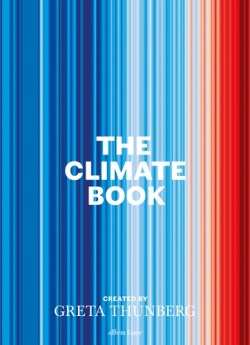
Climate Book

We still have time to change the world. From Greta Thunberg, the world’s leading climate activist, comes the essential handbook for making it happen. It is published by Allen Lane, Penguin Random House.

You might think it’s an impossible task: secure a safe future for life on Earth, at a scale and speed never seen, against all the odds. There is hope – but only if we listen to the science before it’s too late.

In The Climate Book, Greta Thunberg has gathered the wisdom of over one hundred experts – geophysicists, oceanographers and meteorologists; engineers, economists and mathematicians; historians, philosophers and indigenous leaders – to equip us all with the knowledge we need to combat climate disaster.

The crisis cannot be addressed, she writes, without talking about ‘morality, justice, shame, responsibility and guilt’

Alongside them, she shares her own stories of demonstrating and uncovering greenwashing around the world, revealing how much we have been kept in the dark. This is one of our biggest challenges, she shows, but also our greatest source of hope. Once we are given the full picture, how can we not act? And if a schoolchild’s strike could ignite a global protest, what could we do collectively if we tried?

We are alive at the most decisive time in the history of humanity. Together, we can do the seemingly impossible. But it has to be us, and it has to be now.

“One phrase from entomologist Dave Goulson seems to summarise all 464 pages: “It is not quite too late.” Emphasis on the quite.”

The last quote is from the Professor of Biology at University of Sussex, specializing in bee ecology, in the essay The Climate Book, created by Greta Thunberg review – an angry call for action by  for the Guardian.