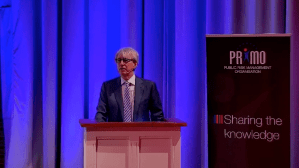
The risk of leadership

A plea for a new search for ‘responsible-in-the-end’ leadership: stewardship

Jack Kruf | 10 March 2017


Of course, we have our democratic system as a great set of principles and values as a form of equipment for good public governance. Public leadership, concerning that of public organisations as well as of the public domain of society, is embedded in this system, at least it should be. You may expect excellent results, because the democratic system traces back to the Greek δημοκρατία 508 BC, and itself is tested and challenged over and over again. Through the millennia it developed until now.

Considering the present state of society and of natural ecosystems you may be surprised by the results of this period of 2525 years of development. The Global Risks Reports published by the World Economic Forum – published since 2005 – tell the story of how critical the earth condition is. Reading these reports I had a flashback to the year 1972 when the Club of Rome presented facts, findings and figures in the report The Limits to Growth. Since at least five decades (i.e. half a century!) we know what is going on and where many generations of leadership has brought us.

Not that good
Within this democratic system the results of our public leadership over the years are not that good. Autocratic systems perform not better. More than ever public risks – being deviations, harms and losses related to the public values we so highly pamper – seem to emerge at a faster pace – such as there are disruptions caused by climate change and cybercrime, large scale pollution and poverty, fundamental lack of social cohesion, water shortage and migration issues. Well, what can we say about risk leadership while leadership itself seems to be the risk? We elaborate on this.

Redefinition
Public leadership must be reconsidered against the background of the structural and diminishing trust of citizens in politics as a whole as well as in public organisations. In society you more and more sense and hear Houston we have a problem. The general feeling is that public leaders do not listen to citizens and companies, are perceived as the ‘elite’, do not act in line with their promises during election time. What makes things worse is the disappearance of public leaders after a governing period of 4 – 6 year, when their term has come to an end, and make place for a new wave politicians, all with new promises.

It seems that risk leadership itself has become a risk

There seems to be much governance from the board room and from behind the desk. The living world of society seems to be separated from the ruling system world, where the leaders actually live in. There is this hugely felt need under citizens, clients, companies and if they could talk to us by natural ecosystems as forests and coral reefs – for leaders that listen to the wants and needs and from there truly generate values as safety, balance, cohesion, continuity, predictability, protection and security. There are gaps and risks (as form of harms and losses to values), all over the place.

From this perspective it is obvious that managing and governing the public risks, that emerge in society – well defined as risk leadership – needs to be redefined. It seems that leadership itself has become a risk factor. The so called risk leaders who cause risks in stead of leading us in the prevention, approach, mitigation and management. That is worrying, because the right course of public governance, anchored in the basic of democracy, depends on this. This aspect of weakness in leadership should at least lead to a continuing process of self-reflection, improved self-awareness and self-correction.

St. Thomas University: “The Risk Leadership Initiative is focused on several aspects of modern risk management, but one of our key issues of concern is the challenge of getting organisational leaders to integrate risk management thinking into their overall decision-making frameworks. Since PRIMO has, from the beginning in 2005, been focused on top level leaders we would be interested to hear your views on the problems, opportunities, and challenges of getting risk management included in executive, politician, and director level policy making and policy implementation. Examples of successes would be particularly interesting to us. Jack Kruf: “It is clear that leaders of public and private organisations should play a coordinating and connecting role in a more holistic approach of the risks we are facing. This well written and illustrated report impressively highlights where we find the challenges on our path toward a more balanced society. Sharing knowledge, open dialogue, building trust, good governance, stewardship and leadership.””

Political risk
In present think tanks has been brought forward by different stakeholders, the impressions that society itself is on a drift and that it seems that the democratic set of tools is running out of its ability to control. In the outcome and result of many elections and referenda it more and more becomes evident that the drift in risks, for society in public risks, finds ground in political leadership and hereto related components. Reflecting on risk leadership brings us automatically from the academic and management domain in the direction of politics.

According Niccolò Machiavelli politics is the world of mainly that of power and influence. Is then politics one of the key drivers of public risk itself? Is the quest of risk leadership in fact all about the risk of politics or political risk? It is possible. Zooming in a bit more here. What is political risk? Matthee (2011) defines it as follows:

‘Political risk is a type of risk faced by investors, corporations, and governments that political decisions, events, or conditions will significantly affect the profitability of a business actor or the expected value of a given economic action.’ 

In a broader definition also citizens and communities should find resort in this definition. Anyway, politics is an obvious dimension that brings harm. An important aspect to build in the new program of Professor Peter Young. It leads in my view to the conclusion that risk leadership at least needs to embrace itself and for its practical applicability and use has to be upgraded, maybe even reconsidered, redefined, re-invented or re-engineered. In the public domain of day to day business and government, it means that this attitude of self reflection needs be applied to every elected and governing council, the place where politics actually emerge.

It has become clear from the European UDITE and PRIMO network that many city managers express the general feeling – from extensive experience with society, citizens, clients, investors, businesses, NGO’s and media – that this unpredictable working of politics has become a critical factor and express that the system of democracy itself is under pressure.

The unpredictable working of politics has become a critical factor

What is leadership if “democracy is the worst form of government, except for all the others.” (Churchill). What is in perspective of the emerging public risks in fact the ability of democracy? Gore (2009) reflected as follows:

”It is now apparent that the climate crisis is posing an unprecedented threat… to our assumptions about the ability of democracy and capitalism to recognize this threat for what it is and respond…”.

These doubts in and lack of trust in de governing system, where leaders live, form the background for a further reflection on leadership, especially when it concerns risks for citizens, society and nature.

Stewardship
Discussing the major public risks within the European network of public leaders the main concept for leadership that addresses and mitigates is felt in the form of stewardship, not (only) in the religious way but as a form that has a true holistic approach. We remember here the great Alexander von Humboldt and his holistic approach over the borders of sciences in the early 19th century. He essentially connected sciences and approaches and with that crossed the lines of segmentation of opinions and views into a true ecological approach of areas and topics. Could his approach be a starting point for a more successful approach of public leadership, connecting vertically detail with headline, strategy with implementation and horizontally all relevant stakeholders. This way of perception could be beneficial and a great asset for modern leaders.

Alexander von Humboldt connected sciences… and with that crossed the lines of segmentation. 

Elaborate a little bit more on Von Humboldt. To be able seeing things as one and interconnected is the capacity of true ‘reflection’ needed, i.e. the capacity zooming out and seeing the larger picture, in connecting the dots. Like Alexander von Humboldt did in his 1858 masterwork (Cosmos part I). He for the first time in history connected the different sciences of the living and non-living world. He concluded: “Physical geography…, elevated to a higher point of view, … embraces the sphere of organic life…”. That was a great discovery and a major lesson to be able to connect the dots.

On governing cities and regions this reflection can be of great advantage in diagnosing the problem and define actions. Reflection is needed to get the bigger picture of things, people and happenings and to develop a sabbatical and clear view how to lead. It helps leaders getting the bigger picture, see more sharply the connection of elements within the public domain and thereby contribute to better decision making and putting things in perspective.

Change

From the network of PRIMO comes the experience that most of the public risks emerge from firstly lack of reflection capacity by leaders and with that insufficient diagnoses causes ineffective decisions. Only 12% of policies leads to implementation and from this only 25% is effective. Secondly lack of good working interfaces between stakeholders caused by a lack of binding leadership and thirdly by what can be defined as responsible-in-the-end leadership, i.e. stewardship. The last being an ethic that embodies the responsible planning and management of resources.

The concept of Risk Leadership can be possibly enriched with key leader capacities of reflection, connection and stewardship. In my view these can contribute to the reduction of risks, caused by leaders themselves and improve the quality of public and private governance and management in general. The initiative of Risk Leadership by the St. Thomas University could not have been timed better in this timeframe of changing paradigms, drifting societies and on a large scale emerging public risks. It is time for change. Ω


Bibliography

Gore, A. (2009) Our Choice: Changing the way we think. Emmaus, US: Rodale Books.

Matthee, H. (2011) ‘Political risk analysis’ in Badie, B., Berg-Schlosser, D., & Morlino, L. (eds.), International encyclopedia of political science (pp. 2011-2014). Thousand Oaks, CA: SAGE Publications Inc. doi:10.4135/9781412959636.n457

This article was originally published to contribute to the Risk Leadership Initiative of the Opus College of Business of the University of St. Thomas, lead by Professor Peter Young. As published here the article has been amended on its original in formulation and positioning. Hyperlinks and biography are added. The publishing date has been kept on its original: 10 March 2017.

© Jack Kruf photo: Ludwig Oswald Wenckebach (1955) Monsieur Jacques [Bronze]. Rotterdam.

FORTE® Framework for Good Governance

Jack P. Kruf , Simon Grima, Murat Kizilkaya, Jonathan Spiteri, Wouter Slob, John O’Dea | European Research Studies Journal.

Purpose
In this article we lay out and discuss a framework proposed by the Public Risk Management Organisation (PRIMO) Europe and the results of a test on public and private entities of EU small jurisdictions, specifically Malta, Slovenia, Luxembourg, Lithuania, Latvia, Estonia and Cyprus. These are countries within the EU having less than 3 million people population.

Design/methodology/approach
We collected our primary data by using a semi-structured questionnaire and administering it to participants who are working directly or indirectly with entities within these EU states. The questionnaire was structured using the FORTE® acronym as themes, ‘Financial and compliant design’, ‘Object orientation and delivery’, ‘Responsibility and stewardship’, ‘Tools and processes for creation’ and ‘Environmental awareness and interaction’, with statements under each theme to which participants were required to answer using a 5-point Likert-scale ranging from “Strongly Disagree” to “Strongly Agree”. We, however, allowed the participants to open up and discuss each statement and recorded these comments.

Some demographic data was also collected as to the type of entity the participants are working with, the level of expertise on governance of the participant and the size of the entity. The quantitative data was subjected to statistical analysis while the results from the open ended question was analysed using the thematic approach.

Findings
Factor analysis provided support for the FORTE Good Governance model for both the Private and Public entities, no-matter if they are small or large. Originality/value: The study provides a better understanding and supports the FORTE Model established by PRIMO Europe, after approximately 15 years of collecting data on public risks and for the first time tests it on both Private and Public entities, in large and small firms in small EU Jurisdictions. Moreover, this model contributed to the vast literature on models of risk management within organisations, but was not validated empirically for reliability of the factors, and on small jurisdictions.

Therefore, the significance and importance of such a study lies firstly on the premise that testing on small countries, can be deemed as small laboratories for more complex politics, regulations and policies of larger countries.

Read article as published in European Research Studies Journal.

De kunst van samenwerken

Door Jack Kruf*

“Samenwerken was al de sleutel tot succes, maar met de huidige grote maatschappelijke veranderingen wordt het een strategische noodzaak, omdat ook het systeem van besturing zelf aan het veranderen is.”

De afgelopen jaren is onder mijn leiding door PRIMO Europe nauwgezet geïnvesteerd in dialoog, diagnose en didactiek om het kennisgoed op het gebied van samenwerken te beoefenen en te bevorderen. Het heeft geleid tot de ontwikkeling van een educatieprogramma voor de top van lokale en regionale publieke organisaties. Een programma waar inhoudelijke expertise, besturingskracht en organisatievermogen elkaar kunnen ontmoeten. Daarmee migreerde de vereniging van haar focus op risicomanagement naar dat van scenario-denken, co-creatie, design-denken en de architectuur van bestuur en navigatie met betrekking tot publieke waarden. Lees meer

*Een bijdrage in VIEWZ met als ondertitel: een strategische noodzaak in tijden van systeemverandering.

Vier stappen voor verbetering publieke organisaties

Bouko de Groot | Financieel Management

“Nieuwe vormen van financial engineering zijn harde noodzaak,” Jack Kruf, PRIMO, over strategie en aanpak van vraagstukken voor openbaar bestuur.

De grote transities die momenteel tegelijkertijd plaatsvinden vormen de grootste uitdaging voor CEO’s en CFO’s, zo bleek uit een recent onderzoek onder leden van PRIMO, de internationale Public Risk Management Organisation. Drie van die transities zijn digitale transformatie, klimaatverandering en circulaire economie. “Bij PRIMO richten we ons op publieke risico’s, dat zijn risico’s voor en in de samenleving. Daarom hebben wij een goed beeld hiervan, omdat wij intensief samenwerken met topmanagers vanuit de praktijk. Wij weten wat gemeenten bezighoudt en wat er speelt in de samenleving,” zegt Jack Kruf, directeur President PRIMO Europe.

Hij constateert dat de publieke risico’s van die grote transities aanzienlijk zijn. Om die te managen is geld nodig. Geld dat er niet is. Althans bij de overheid minder, omdat schulden toenemen, reserves niet of nauwelijks meer groeien, innovatie tot stilstand komt en steeds meer geld naar ‘gaten dichtlopen’ gaat. Nederlandse gemeenten moeten een ratio van weerstandsvermogen hebben van 1, maar landelijk bekeken en afgezet tegen wat nodig lijkt 0.25 , zo blijkt uit de discussie binnen de Denktank PRIMO/BNG Bank, waarbij de landelijk ingeschatte risico’s ten gevolge van komende transities zijn afgezet tegenover de beschikbare reserves en vermogens.

Financieel gaat het niet goed. “Het probleem is dat transities lange lijnen van 15 tot 30 jaar nodig hebben, terwijl politici komen en gaan in perioden van 4 jaar. Zij kijken vooral naar de korte termijn, bovendien verschuiven de bestuurlijke doelen steeds. Bedenk daarbij dat een gemeente eigenlijk meer dan 300 ‘producten’ heeft, dan snap je hoe groot de uitdaging is in het managen van publieke risico’s.” Te groot voor veel, want de solvabiliteit van een boel gemeenten is zo laag, dat zij niet meer kunnen investeren in de grote, noodzakelijke veranderingen, zoals de circulaire economie, de waterhuishouding of de stikstofcrisis.

“Groningen bijvoorbeeld zit maar rond de 10 procent, die staan financieel met de rug tegen de muur. Dat is eigenlijk onacceptabel bezien vanuit de opgaven die voor ons liggen. Als het een bedrijf zou zijn, zou het zo failliet zijn. Dat geldt voor veel gemeenten, die krapte.” De gemeenten zijn min of meer zelf mede-schuldig aan het veroorzaken van dit probleem. “Het rijk wilde bezuinigen en bracht tegelijkertijd het sociale domein naar de gemeenten. Dat hadden ze nooit moeten accepteren. De Rekenkamer gaf in 2014 nog aan dat de gemeenten er niet klaar voor waren. Toch gingen zij akkoord. Nu zitten velen met serieuze begrotingstekorten. En dan is er gewoon geen geld meer voor andere beleidsterreinen. “

Nieuwe aanpak voor gemeenten
Kruf roept daarom gemeenten op tot een nieuwe financiële investeringsaanpak. “We moeten de financiële strategie opnieuw uitlijnen en wel op basis van het eerlijke gesprek. Wat zijn de opgaven en wat de belangrijkste risico’s? En vooral, hoe gaan we die financieel aanpakken? Hun financieel management moet gemoderniseerd worden, nieuwe financieringscontstructen liggen voor de hand met vormen van co-creatie en co-engineering. Dat is de opgave voor de komende 10, 15 jaar. Financiering die nieuwe publieke waarde kan creëren en de sustainable goals kan borgen.

We moeten daarbij nieuwe elementen gaan toevoegen, en het vak financial engineering verbinden met de boeg van het schip. Werken van de machinekamer volstaat niet meer. Innovaties vragen om nieuwe allianties in financieel management. Het zal een omwenteling vragen in denken en handelen. Van rechtmatigheid en doelmatigheid als eerste zorg, naar doelgerichtheid en effectiviteit met ondernemerschap, goede contracten en vooral moderne vormen van financiering. Tijd voor vernieuwing.”

Kruf heeft vier hoofdpunten voor een verbeterde aanpak bij openbare organisaties:

  • De financieel verantwoordelijke wethouder is aan zet om de feiten op tafel te brengen. Met CEO, CFO en concerncontroller is hij of zij aan zet om een haalbare en implementeerbare strategie te ontwikkelen.
  • Daarbij moet open en transparant duidelijk gemaakt worden wat er echt nodig is voor de komende 10-15 jaar.
  • Vervolgens moet duidelijk worden met welke langlopende contracten, investeringen en partijen in de markt dat gerealiseerd kan worden.
  • En er moet inzicht komen welke partijen nodig zijn om dat te bereiken.

PRIMO definieert risico als de potentiële schade aan iets waar wij waarde aan hechten. Niet handelen leidt tot aantasting van publieke waarden zoals veiligheid en leefbaarheid. Het nieuws toont ons dat de publieke risico’s fors toenemen en gemeenten aan zet zijn zich financieel te herpakken.

De Oriënt Express

Orient Express
Poster van de Oriënt-Express 1888.

Door Jack Kruf

Het verhaal van de Oriënt Express*. Zij kan dienen als een krachtige beeldspraak voor de nieuwe architectuur van publiek risicomanagement, zeker als het gaat om het ontwerp, de inrichting en het management van majeure vraagstukken.

Het concept blinkt uit in eenvoud en verbinding. Het is een all-in one: trein, reis, prijs én tracé. Bovendien met unique selling points: “Service Rapide,  Sans Changement de Voitures et Sans Passeport entre…”

Het is mijn gedachte: elk van de grote opgaven die begin 2021 voor ons liggen te gaan beschouwen als een Oriënt Express is de idee. De eerste trein reed in 1883 tussen London en Istanboel en was het initiatief van een ingenieur George Nagelmackers. Een baanbrekend concept, dat nu ook van toepassing kan zijn voor de lange reizen.

Hij had er de Nobelprijs voor Governance voor kunnen krijgen, maar die bestond toen nog niet. In het versnipperd Europa met staatjes en koninkrijken was elke kilometer van dat traject uit-onderhandeld met overheden, grondeigenaren, treinmaatschappijen, banken, beleggers en particuliere bedrijven.

Dat éne treinkaartje was administratief opgeknipt met toeslagen, verrekeningen en verdienmodellen voor elke kilometer. Een halve kapel vol met contracten, financieringsconstructen en overeenkomsten was nodig om deze reis mogelijk te maken.  Ook de locomotieven, de stations die aangedaan moesten worden, de diversiteit aan spoorbreedtes, landschappen, bergen, rivieren en dalen en de te verwachten weersomstandigheden.

Welnu in 2021 stappen wij opnieuw op. Een reis tussen nu (fossiele energie) naar 2050 (duurzame energie). Een reis van een generatie. Op weg naar een leefbare wereld voor mijn kleinkinderen Sam, Sebas en Equoia. Zo concreet en simpel is het. Ik heb mijn eerste Legotrein al gekocht, om te oefenen… met hen natuurlijk…

Wie wordt de nieuwe George Nagelmackers van de Energietransitie of van de Circulaire Economie? Allemaal en tegelijkertijd verkennen, sleuren, sleutelen, bouwen en onderhandelen kan niet. Coördinatie is nodig. 

In het concept van de Oriënt Express liggen de verbindingen naar de nieuwe zo gewenste systeemsturing besloten. Het herbergt de contouren van een nieuwe aanpak.

*Deel afscheidslezing te Breda op 19 maart 2021 door Jack Kruf.