Leiderschap in reflectie

Leiderschap wordt na elke crisis opnieuw gedefinieerd. Er zijn allerlei gedachten en bespiegelingen over wat er precies is gebeurd  en nog steeds gebeurt. Was Covid-19 een witte zwaan? Was het een zwarte zwaan? Wat had de rol van de C-Suite en van het publieke bestuur kunnen of moeten zijn? Schoten zij tekort? Hadden zij het kunnen weten? Wisten zij van de dreiging? De vragen en de antwoorden zijn talrijk. Honderden artikelen vinden dagelijks hun weg naar de media, social of niet.

Het is interessant, die vele reflecties over leiderschap in tijden van crisis. De bestuurlijke wetenschappen zoeken meer dan ooit wat goed leiderschap is, naar wat het zeker niet is of wat het had of zou moeten zijn. Wat zegt het huidig leiderschap over waar wij staan als samenleving. Zoals ecologen weten waarom madeliefjes bloeien en wat hun plek in het bosecosysteem is, zo willen bestuurskundigen weten hoe leiderschap (een bloem is een mooie metafoor) verbonden kan met de staat van de samenleving.

Wat leert deze crisis ons op dit punt? Hoe staat het eigenlijk met de natuurlijke selectie van onze leiders nu de omstandigheden in het grote bos veranderd zijn en nog gaan veranderingen? Zo’n zeperd als Covid-19 kunnen wij ons niet nog eens permitteren. En u weet met mij, wat op ons bordje ligt, wat komen gaat. Met het Global Risks Report 2020 voor ons, de Sustainable Development Goals in de achterzak en de Grondwet in de hand, is het zaak nog wat dieper te graven op het aspect van leiderschap. Is wijs. Is noodzaak. Leiderschap is in volle reflectie. Een nieuwe lente vraagt om een nieuw geluid.

The essence of reflection

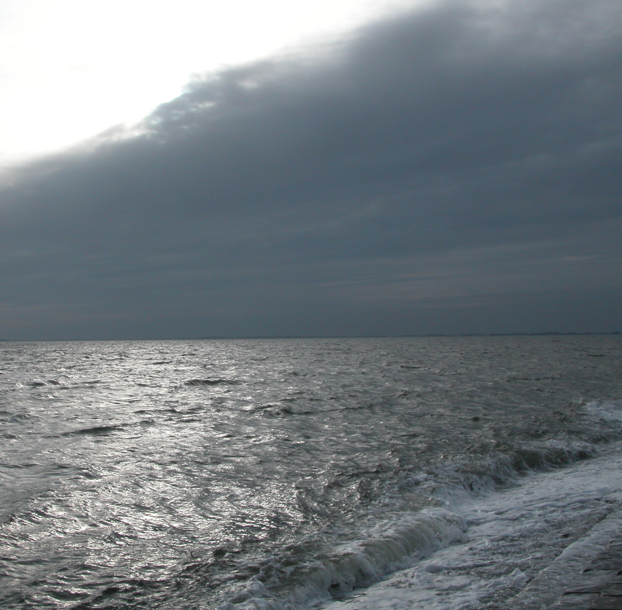
Kruf, Louise G.S. (2009). Breda.

‘Reflection’ is in fact zooming out in trying to connect the dots. Or as Alexander von Humboldt stated in 1858 (Cosmos part I) in connecting the dots between the different sciences: “Physical geography…, elevated to a higher point of view, … embraces the sphere of organic life…”. That was a great discovery. He was in fact the first ecologist with a holistic view on the natural environment. Darwin adored him.

In the same way the ecosystem of the public domain as well as its governance, can be reflected upon. Zooming out is reflection.

Some say reflection is needed to get the bigger picture of things, people and happenings or to develop a sabbatical and clear view. For some people reflection works as a catharsis or to “re-create” itself and one’s thoughts. For others it is just a way to find another perspective.  Anyway reflection can help us to get the bigger picture, see more sharply the connection of elements within the public domain and thereby contribute to better decision making and putting things in perspective.

Siena DNA

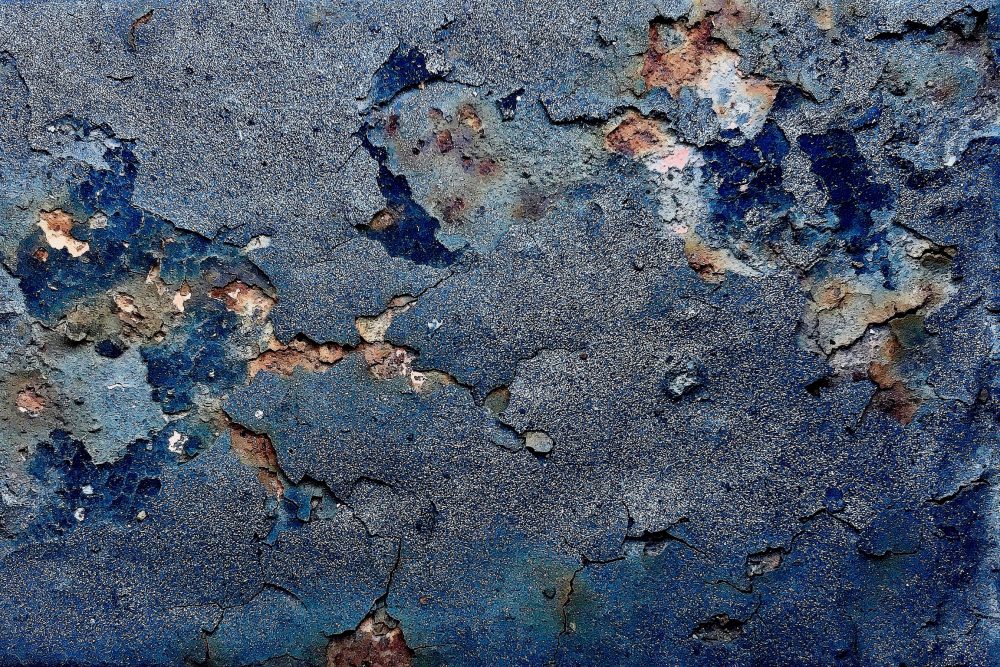
Kruf, J.P. (2006) Siena DNA [fine art print]. Breda: Civitas Naturalis.
The striking light in one of the streets of Siena, makes the DNA of this city visible. This palette of grey, beige and taupe colours and the fibers of the wall is a small piece of art in itself. This photo I took in 2006 near Piazza del Campo, in the city center. It has so many details that you almost can read how the city is governed and managed, what its rules and regulations are and even how the urban policy plans guide the city infrastructure. Sherlock Holmes doubtlessly is able to complete the whole story.

This photo tells the story of the holistic principle on which every ecosystem has been built. The street tells the story of the city and its governance. It is an exponent of it. A quote by one of the greatest ecologists John Muir (Gilford, 2006) makes us understand the principle of holism – the idea that the whole of something must be considered in order to understand its different parts (Oxford) – in just one simple sentence:

When we try to pick out anything by itself we find it hitched to everything else in the Universe.

JOHN MUIR

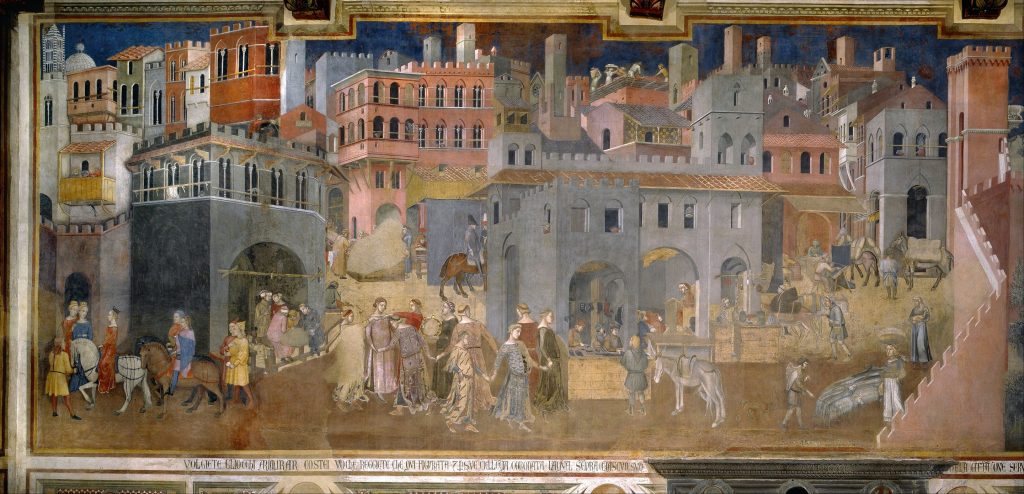
Siena is maybe the city where public governance was invented. In fact, it can be considered as the Mecca for city managers, mayors and aldermen. History has been written in the painting in the Town Hall of the City of Siena (at that time it was a republic by the way). It is The Allegory of Good and Bad Government, a series of three fresco panels painted in the Sala Dei Nove by Ambrogio Lorenzetti in 1338/1339. A glimpse of both is visible in this simple and shaded street view.

Lorenzetti, Ambrogio (1338/1339) The Allegory of Good and Bad Government [Fresco). Siena, Sala Dei Nove.

The only way to get to the high level of good government seems to be by coordination, expressed in all forms and tonalities in this beautiful fresco of Lorenzetti, almost 700 years ago. The importance of coordination – Siena was a very well-run city at that time – is explained very clearly in this video by Charles Fried, professor at Harvard Law School, underlining the holistic principles of city governance.

Bibliography

Gilford, Terry (2006) Reconnecting with John Muir. Athens: University of Georgia Press, 216 pp.

Oxford Learners’ Dictionaries, Holism. https://www.oxfordlearnersdictionaries.com/definition/english/holism