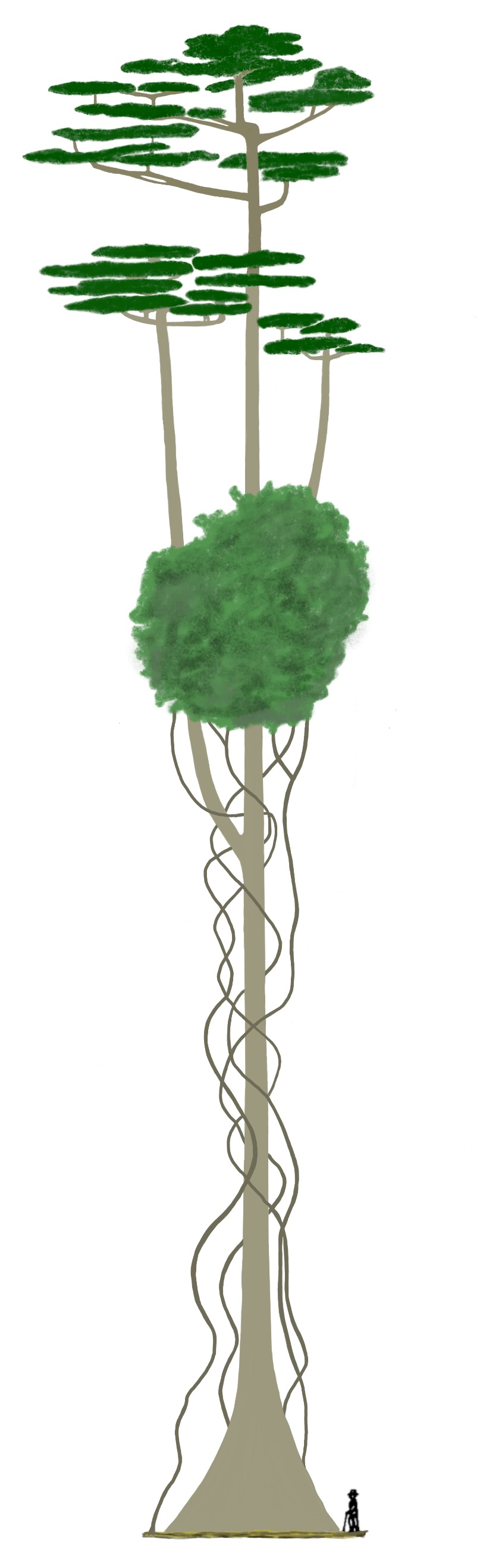
The tree and the liane

One of the core determinants in diagnosing an ecosystem is the interaction between components. 

Understanding the exact interaction—or, in this case, a combination of interactions—is key to proper diagnosis.

This design tells the story of a tree and a liane. Who benefits from whom, when, and why? The tree and liane are real, as measured by Roelof Oldeman (1974a), but they are also metaphors for people or organisations.

I firmly believe in the plausibility of this substitution, primarily due to the universal nature of ecological interactions. These are governed by a set of fundamental patterns, a mere seven, which exist in nature. This universality extends to the public domain, which is intricately intertwined with nature.

It is part of transect by Oldeman (1974a): “La liane perchée sur le Terminalia amazonia à une hauteur d’environ 35 mètres appartient probablement à la famille des Polygonacées“. Curation and colour selection by Jack Kruf.

Bibliography

Oldeman, R.A.A. (1974a, 2nd ed.). L’architecture de la forêt guyanaise. Mémoires ORSTOM, 73.

Oldeman-larchitecture-de-la-foret-guyanaise

Common eider

This duck stands out in colour matching. The common eider (Somateria mollissima L.) shows its yellow and green in an original palette and structure. It is a high-speed duck which can fly up to 113 km/h. Beauty and speed are a great combination.

Bibliography 

Kruf, J. (2024) Common eider [fine art print]. Breda: Private collection.

Evening Coastline

In the evening, along the coastline in South-East England, the contours of the cliffs become more pronounced and rocky. Time for reflection.

Bibliography

Kruf, J. (2024) Evening coastline [fine art print]. Breda: Private collection.

Boterbloem

Het voorjaar is begonnen. Deze boterbloem toont haar geel-oranje kleuren.

Kruf, J. (2024) Boterbloem [fine art print]. Breda: Private collection.

The essence of tree roots

Jack Kruf

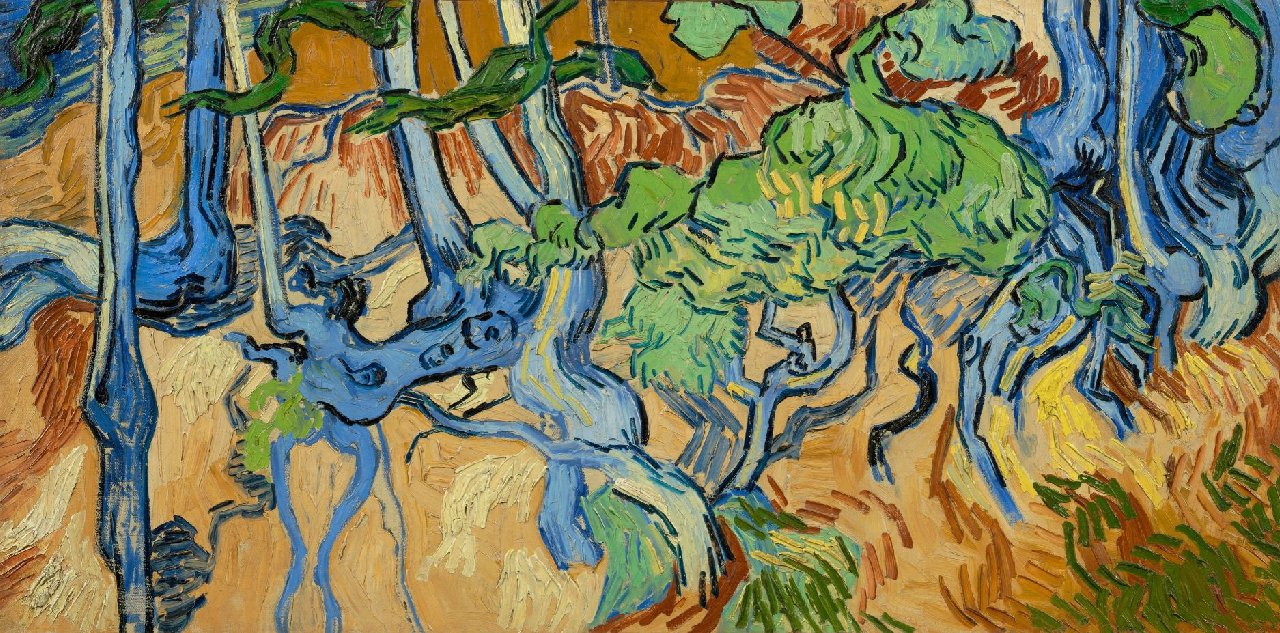
The wisdom of life, the book with all its guidelines and secrets, the codex, can be found in the forest. Codex is derived from the Latin caudex, meaning “trunk of a tree.” The lowest part of the trunk, which connects to the roots, is where two worlds meet in the binding principles of life: ‘above ground’ and ‘underground’.

Here, the forest’s soul can be found, the marketplace where all traffic streams from earth (upwards, water, minerals) and sun and air (downwards, sugars, after photosynthesis) are exchanged, the roundabout on the highway of life.

This meeting point is where growth and development are coordinated, the past, present, and future meet, and the counterpoint is where life starts. Vincent van Gogh painted this meeting point, Tree Roots, as only he could: colourful and straight to the heart. He understood. It was his last painting, ‘digging deep’ into the essence of life.

Bibliography

Gogh, V.  van (1890) Tree Roots [oil on canvas]. Amsterdam: Van Gogh Museum.