
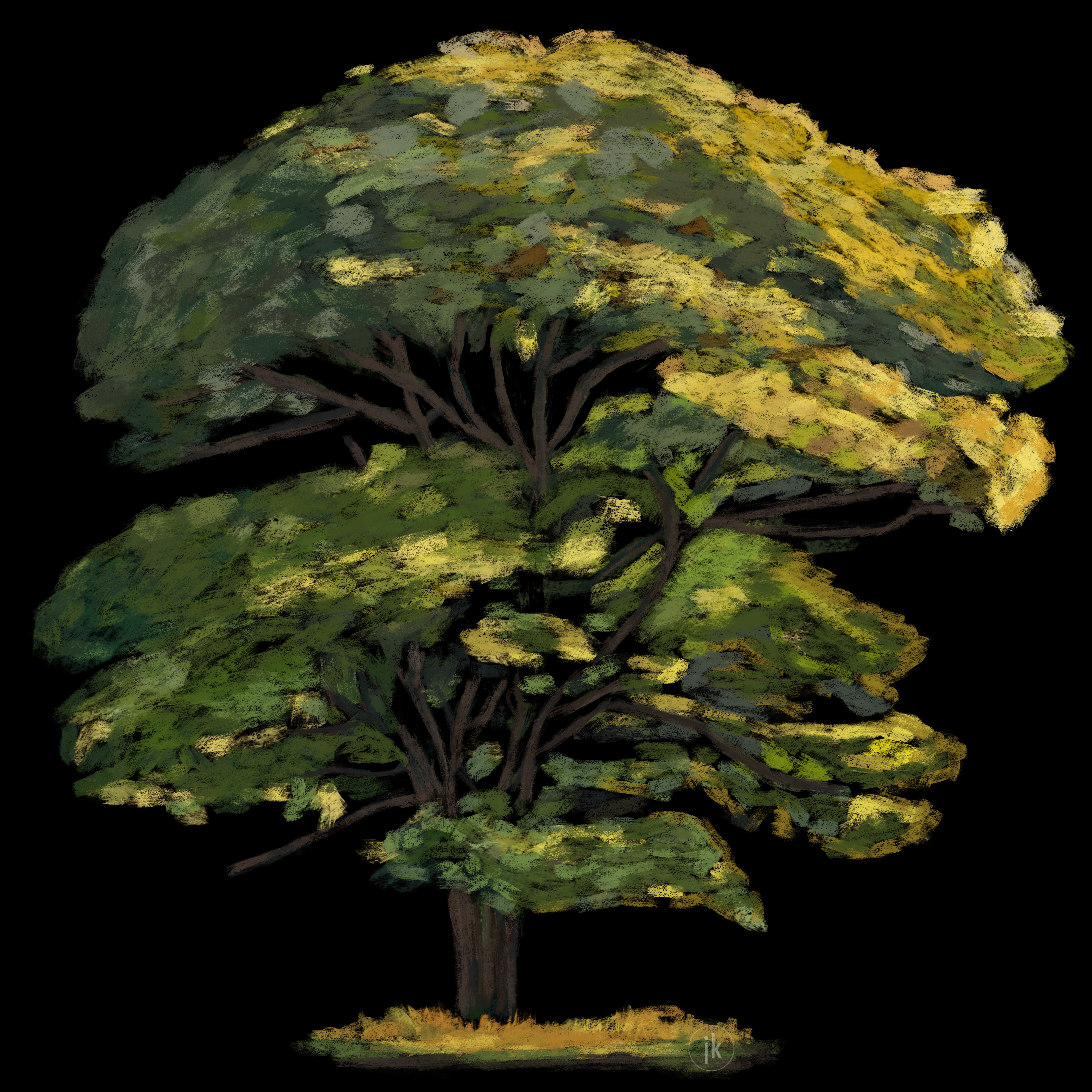
This oak (Quercus robur L.) is standing in the evening light.
Bibliography
Kruf, J. (2024) Oak in light [fine art print]. Breda: Private collection.
This oak (Quercus robur L.) is standing in the evening light.
Bibliography
Kruf, J. (2024) Oak in light [fine art print]. Breda: Private collection.
 One of the core determinants in diagnosing an ecosystem is the interaction between components.
Understanding the exact interaction—or, in this case, a combination of interactions—is key to proper diagnosis.
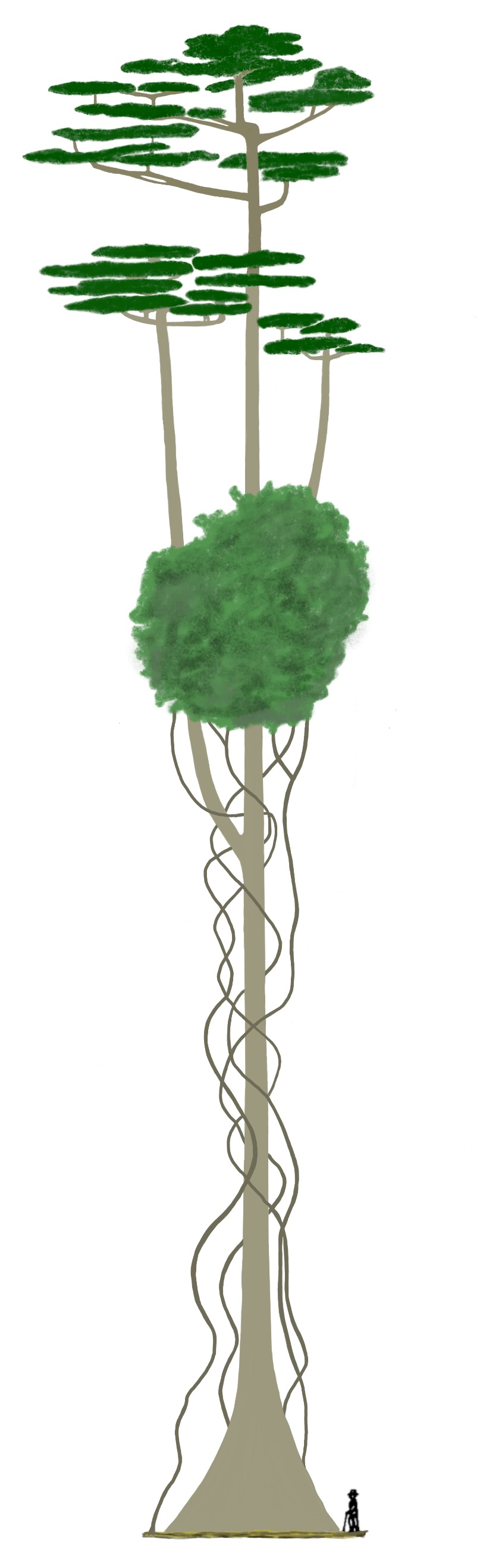
This design tells the story of a tree and a liane. Who benefits from whom, when, and why? The tree and liane are real, as measured by Roelof Oldeman (1974a), but they are also metaphors for people or organisations.
I firmly believe in the plausibility of this substitution, primarily due to the universal nature of ecological interactions. These are governed by a set of fundamental patterns, a mere seven, which exist in nature. This universality extends to the public domain, which is intricately intertwined with nature.
It is part of transect by Oldeman (1974a): “La liane perchée sur le Terminalia amazonia à une hauteur d’environ 35 mètres appartient probablement à la famille des Polygonacées“. Curation and colour selection by Jack Kruf.
Bibliography
Oldeman, R.A.A. (1974a, 2nd ed.). L’architecture de la forêt guyanaise. Mémoires ORSTOM, 73.

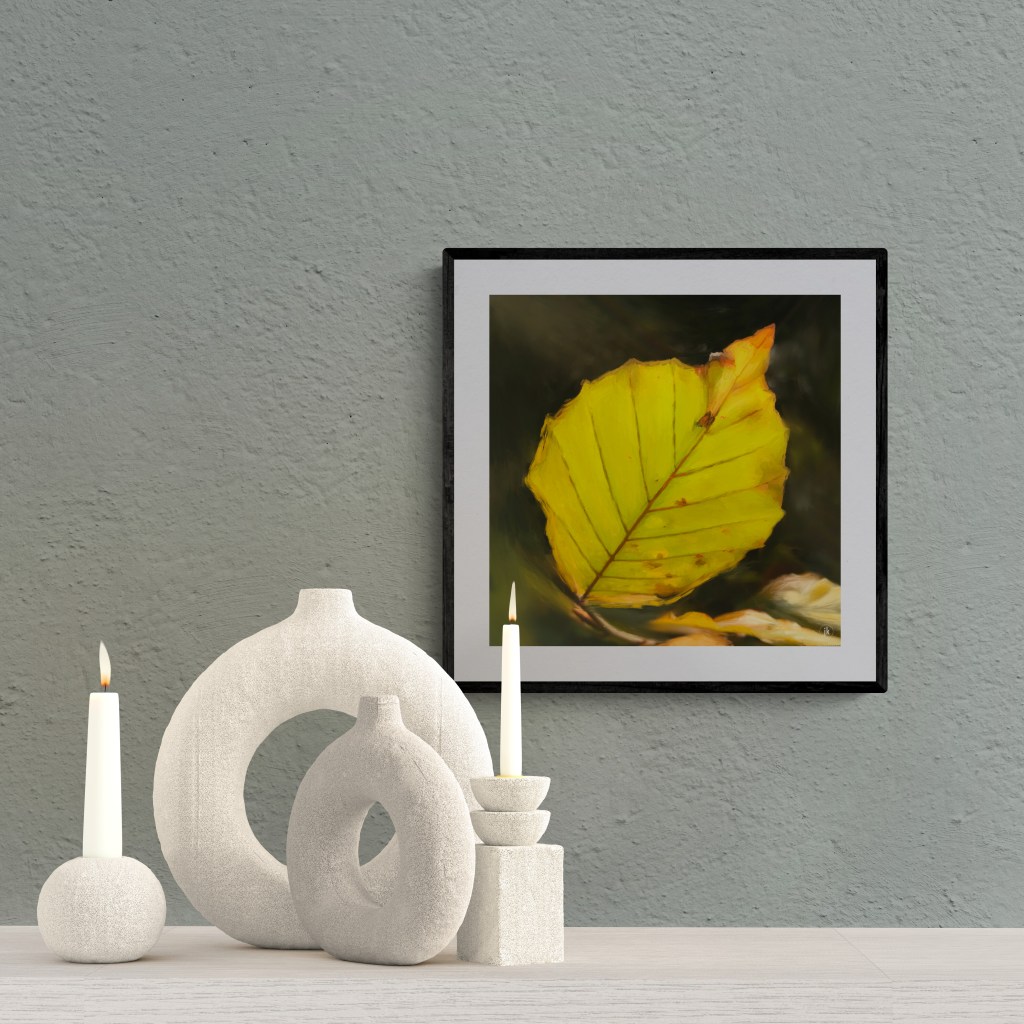
This beech leaf shows that autumn is coming. It is time the tree sends a warm thanks to the leaf for the offered services last spring and autumn. It is now time to say goodbye.
Bibliography
Kruf, J. (2023) Autumn Beech Leaf [fine art print]. Breda: Private collection.
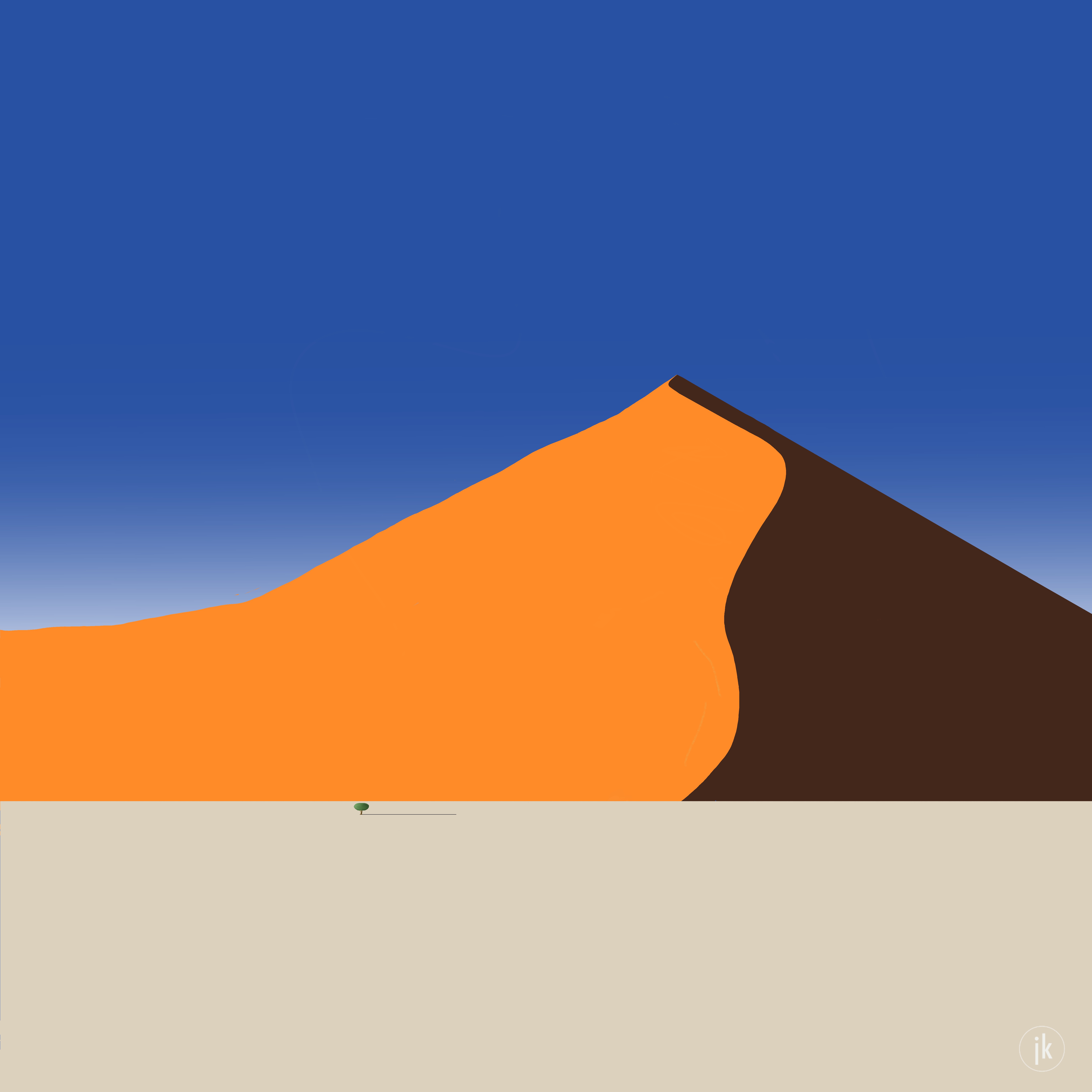
The Acacia at Sossusvlei almost disappears in Namibia’s vast and high landscape of sand dunes (more giant than the Eiffel Tower).
Bibliography
Kruf, J. (2006) Desert Dimensions. Breda: Private collection.
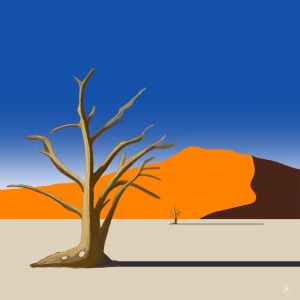
“Trees are the main players in the Empire of the Sun.” This is what friend (professor) Roelof Oldeman told me in the summer of 2022, driving at walking speed through the forests of the Veluwe some weeks before he passed away. He continued: “We should consider them as such and treat them with grace, dignity and respect. Without them, we will be lost.” Wisdom it is.
Many trees and forests are under immense pressure due to human expansion with related lousy governance and management. We need to remind ourselves – from the perspective of ‘hope’, i.e. the idea of a better world with internal high inner connection and involvement (Cornel West) (in contrast with optimism) – that nature is much bigger than us: the tree is dead, long live the tree!
In Deadvlei, these proud acacias still stand. They are believed to have died 600–700 years ago due to changes in river flow, drifting sand dunes and medieval climate changes. They are silent reminders of my dear friend’s noble thoughts and considerations. I found this one in my notebook from our travels through Namibia in 2003 and repainted it.
Bibliography
Kruf, J.P. (2022) The tree is dead, long live the tree! [fine are print]. Breda: Private collection.
 Kruf Huyssons