What does it mean to be lonely? How do we live, if we’re not intimately engaged with another human being? How do we connect with other people? Does technology draw us closer together or trap us behind screens?
“Loneliness, I began to realise, was a populated place: a city in itself. And when one inhabits a city, even a city as rigorously and logically constructed as Manhattan, one starts by getting lost”
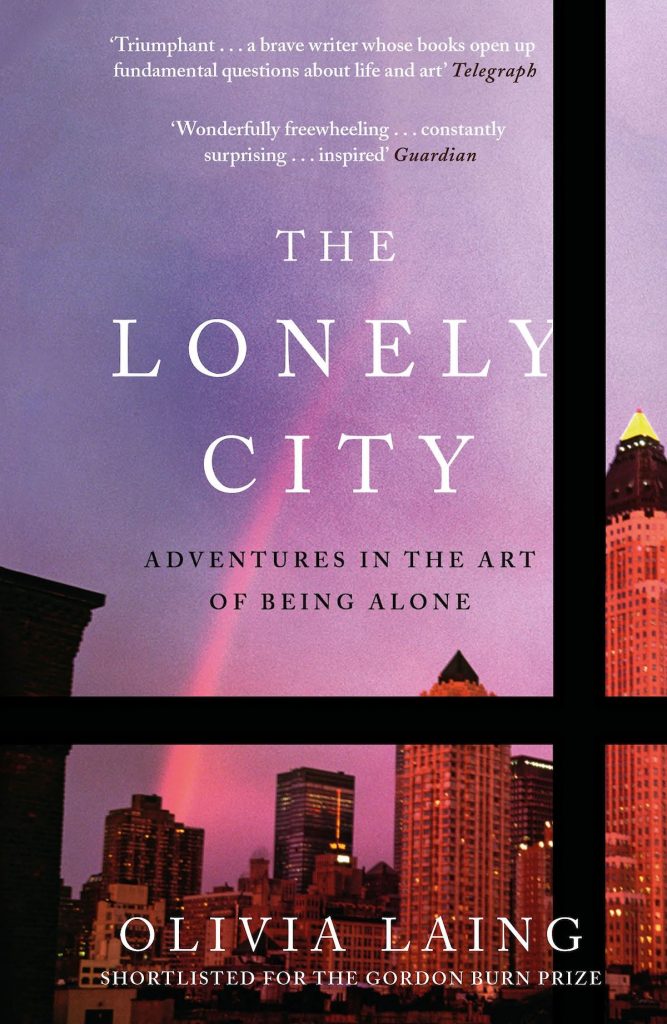
When Olivia Laing moved to New York City in her mid-thirties, she found herself inhabiting loneliness on a daily basis. Fascinated by this most shameful of experiences, she began to explore the lonely city by way of art. Moving fluidly between works and lives – from Hopper’s Nighthawks to Warhol’s Time Capsules, from Henry Darger’s hoarding to David Wojnarowicz’s AIDS activism – Laing conducts an electric, dazzling investigation into what it means to be alone.
“Loneliness is personal, and it is also political. Loneliness is collective; it is a city. As to how to inhabit it, there are no rules and nor is there any need to feel shame, only to remember that the pursuit of individual happiness does not trump or excuse our obligations to each another. We are in this together, this accumulation of scars, this world of objects, this physical and temporary heaven that so often takes on the countenance of hell. What matters is kindness; what matters is solidarity. What matters is staying alert, staying open, because if we know anything from what has gone before us, it is that the time for feeling will not last.”
About the feeling many of us will know or recognise, that of being the individual, the citizen or the inhabitant, and seeking connection with the city, with that larger Ecosystem City®, Laing formulates precise:
“Imagine standing by a window at night, on the sixth or seventeenth or forty-third floor of a building. The city reveals itself as a set of cells, a hundred thousand windows, some darkened and some flooded with green or white or golden light. Inside, strangers swim to and fro, attending to the business of their private hours. You can see them, but you can’t reach them, and so this commonplace urban phenomenon, available in any city of the world on any night, conveys to even the most social a tremor of loneliness, its uneasy combination of separation and exposure.”
Humane, provocative and moving, The Lonely City is a celebration of a strange and lovely state, adrift from the larger continent of human experience, but intrinsic to the very act of being alive. Read more at Canongate Books.
Bibliography
Laing, Olivia (2016) The Lonely City: Adventures in the heart of being alone. Edinburgh: Canongate Books Ltd.


 Kruf Huyssons