
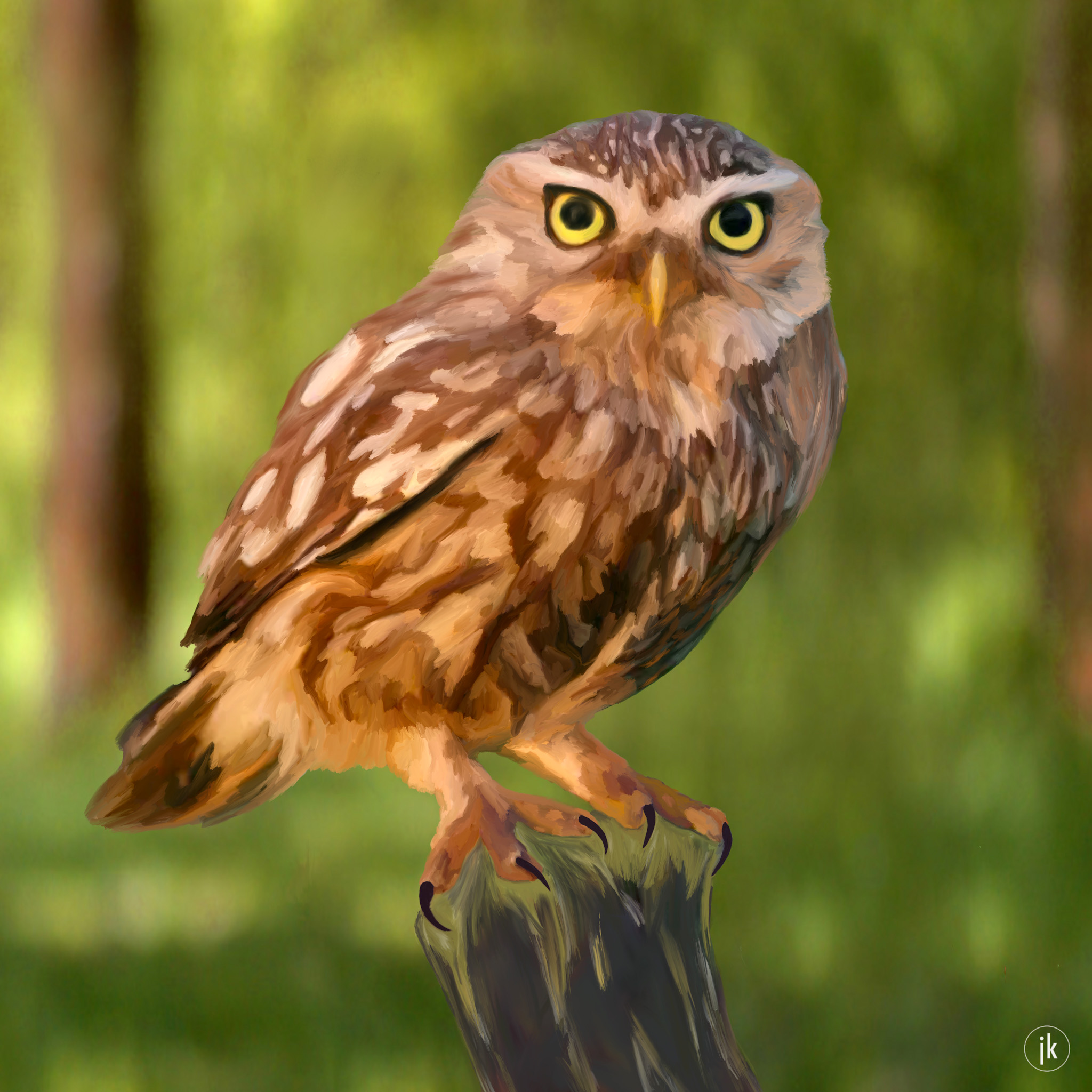
De steenuil, die luistert naar de prachtige Latijnse soortnaam Athene noctua, is de kleinste uil. De Engelsen noemen hem Little owl. Hij is zo groot als een merel.
Bibliografie
Kruf, J. (2024) Steenuil [fine art print]. Breda: privécollectie.
De steenuil, die luistert naar de prachtige Latijnse soortnaam Athene noctua, is de kleinste uil. De Engelsen noemen hem Little owl. Hij is zo groot als een merel.
Bibliografie
Kruf, J. (2024) Steenuil [fine art print]. Breda: privécollectie.
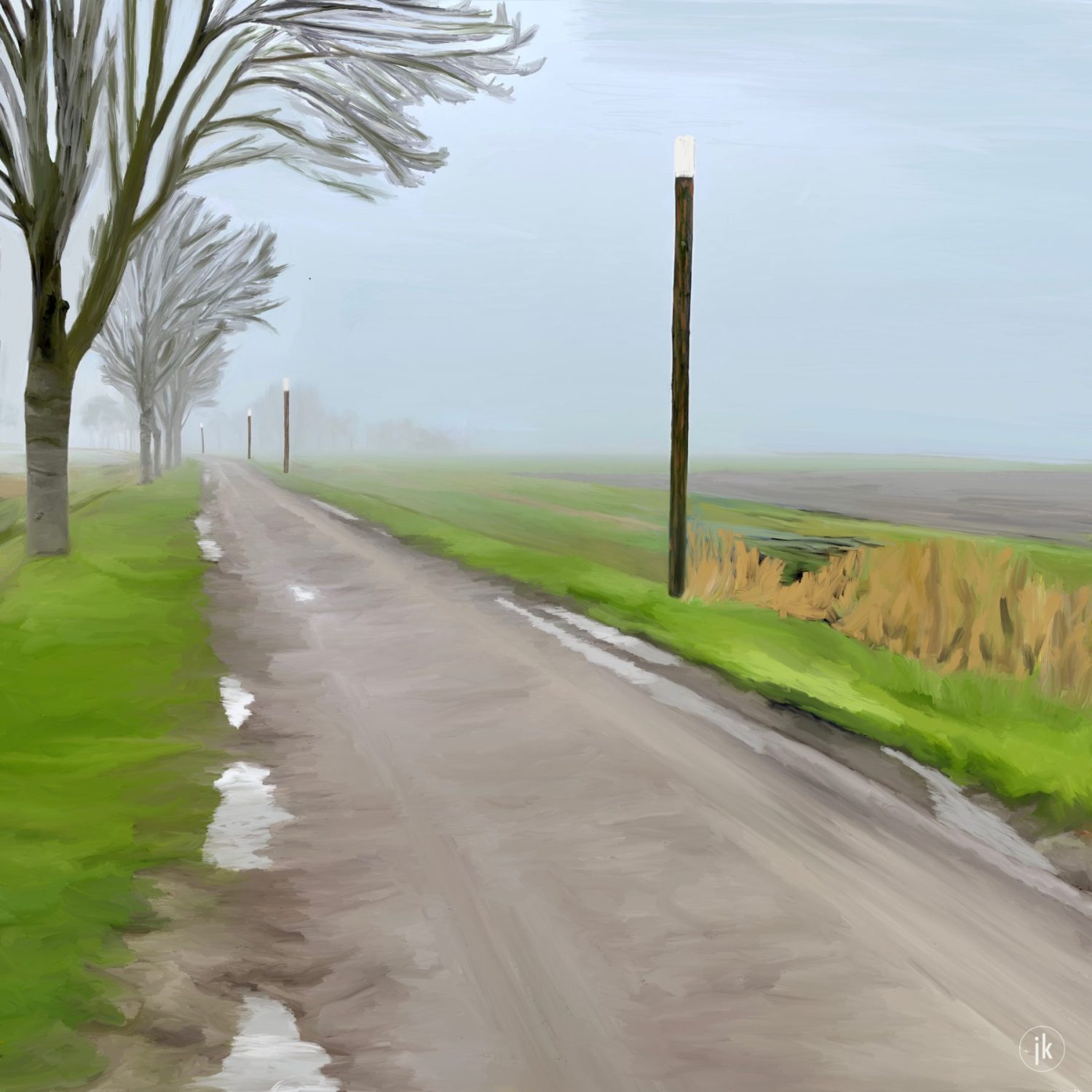
Op deze mistige dag in januari toont de Ignatiusdijk – Auvergnepolder te Halsteren – de markeringen van de 1953 golven.
Zij staan er om onze verdronken vrienden en geliefden te herinneren en te gedenken. Zij staan er misschien ook wel, om ons permanent bewust te houden van het veranderend tij van het klimaat en de stijging van de zeespiegel. De nullijn van het NAP (Nieuw Amsterdams Peil) schuift langzaam naar boven.
De witte markeringen (+ 5 meter NAP) van de golven van toen staan collectief gegrifd en zijn daarmee onze monumenten.

De uilen heersten over de wereldwijde wouden, zo’n 62 miljoen jaar geleden. Mensen waren er nog lang niet. De Oehoe (Bubo bubo L.) hij is er nog. Een wonder van wijsheid, met meer dan uitstekend dag- én nachtzicht en klauwen die werken als bankschroeven. Een sterke combinatie blijkbaar. Een ode.
Bibliografie
Kruf, J. (2024) Oehoe [fine art print]. Breda: privécollectie.

Moving to the right feeling expressed in my colours, there is this feeling of infection, disturbance, and the ability to justify loss.
Bibliography
Kruf, J. (2024) Moving to the Right [fine are print]. Breda: private collection.
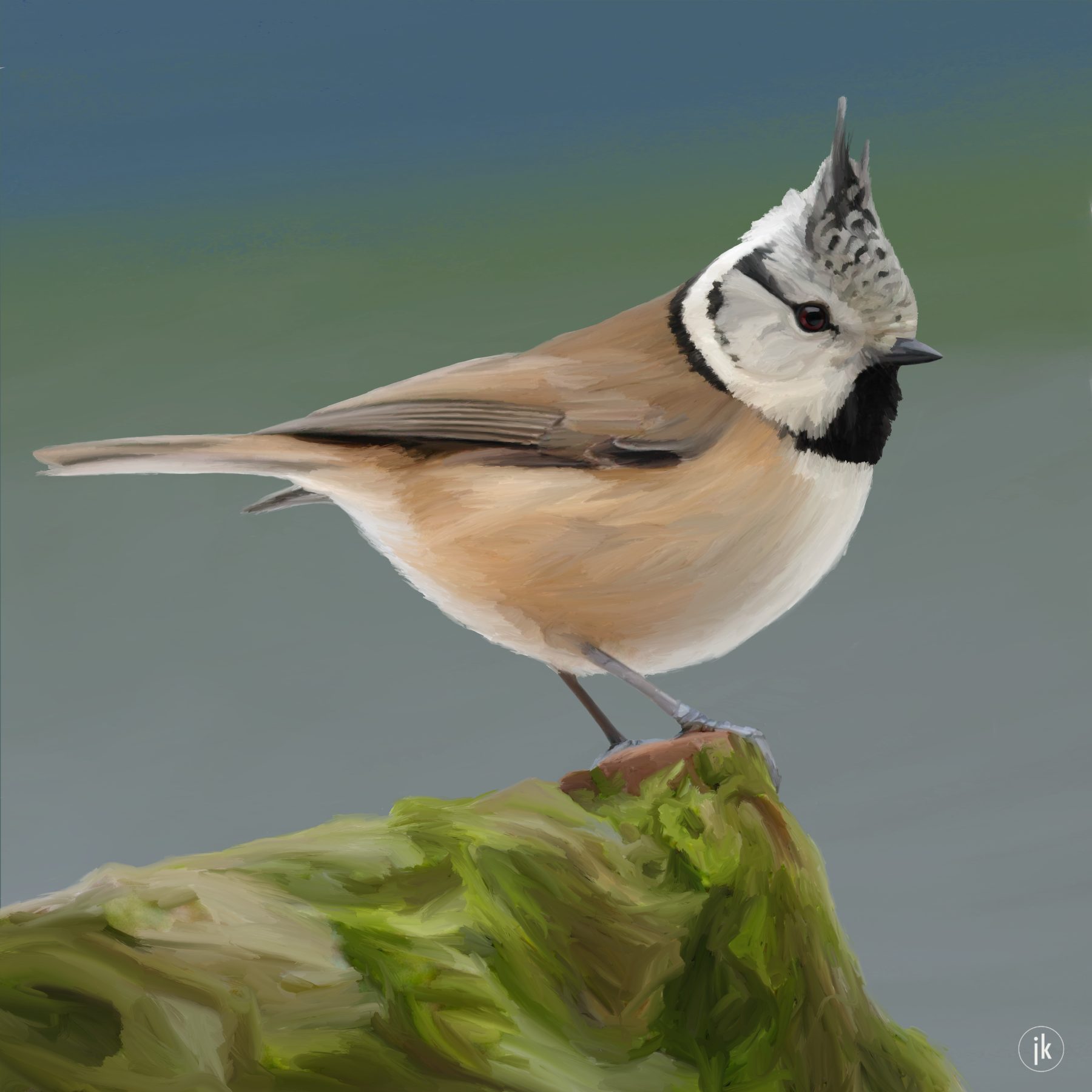
De kuifmees (Lophophanes cristatus L.) toont haar unieke kleurencombinatie.
Bibliografie
Kruf, J. (2024) Kuifmees [fine art print]. Breda: privécollectie.
 Kruf Huyssons