De wolf is terug

Inmiddels zijn wij na de ontdekking van de eerste wolf – terug in Nederland! – enkele jaren geleden, volop in discussie geraakt hoe om te gaan met het dier dat wij als nomaden al zo vreesde. Het hele systeem van overheid en belangenorganisaties is in werking getreden om de wolf of te reguleren of juist zijn vrijheid te laten.

Ik haal toch even terug mijn bericht van 7 maart 2015, toen het nieuws van de ontdekking door Lieke alle krantenkoppen haalde.

De wolf staat aan de top van het ecosysteem, weten wij. Hij maakt het compleet. Hij is terug. In Drenthe. Zowaar geschiedschrijving na 150 jaar afwezigheid. De waarneming vanochtend door Lieke, is eigenlijk een puur moment.

Er is blijheid bij de ecologen dat de top van het ecosysteem is teruggekeerd ‘op het nest’. Maar goed de jagers zullen daar anders over denken, laat staan de agrariërs. Velen zullen volgen met een standpunt. De wolf wordt een politiek item, hoe dan ook. Maar nu nog niet.

Dit moment, vandaag, is er één van puurheid. Er is iets ‘oers’ terug Nederland . De wolf is niet alleen een sprookjesfiguur maar een ware metafoor van wildernis. Hij spreekt tot onze verbeelding om zijn waarneming en kracht. En wij weten ook dat alle honden, onze huisdiervrienden, ervan afstammen, hoe klein ook. De wolf staat aan de basis. Hij is de oer-hond.

De euforie van de waarneming is nu nog ontdaan van incidenten, van schade aan veestapel of erger mensen, van economische benadeling, van politieke vragen, raadsdebatten, nieuwe wet- en regelgeving en vele beleidsplannen. Van datgene dat ons Nederlanders zo typeert: het willen beheersen, inkaderen en controleren.

Ik geniet nog even van de spontane kreet van Lieke, toen zij de eerst wolf waarnam: “Kijk papa, daar loopt een wolf!”. Hoe mooi kan het zijn.

Freedom

Jack Kruf (2018) Freedom [fine art print, 1/1, sold]. Poppel, Belgium: Private collection.

Freedom is one of the highest personal values. It finds its build-up (among others) in the feeling of walking in the pristine snow (white), the cloud illusions (grey), the ability to sport, dance, travel and recreate (brown) and the expression in music art and culture (yellow). A personal expression.

Spider and I

© Jack Kruf (2018) Spider and I. Breda: Private collection.

We meet every time of the year, at the crossroad of October and November, when autumn is in full swing. Where I admire its art work and skills to create and walk the web. And spider knows we offer it a safe place to build its house.

That is our policy: to increase biodiversity around the house. Spider knows. This natural beauty found its place. We meet here. No, it is not the moment to compare spider with some political leader (global and local), but just wonder and admire. The colours of its body are really astonishing.

Emily Dickinson

Reading the book ‘Poems’ by Emily Dickinson. In the preface two of her friends describe how they found, perceived and eventually published (after her death) the poems. The description of their first perception is a poem on its own:

In many cases these verses will seem to the reader like poetry torn up by the roots, with rain and dew and earth still clinging to them, giving a freshness and a fragrance not otherwise to be conveyed.

As if you can feel, taste here poems from here. They are as original as the woman who wrote them. Straight from the Earth and written with the heart.

Inspiring, again and again, to stretch and challenge the openness and the boundaries of my own perception. Emily has a wide range of doors of perception.

Although Dickinson was a prolific private poet, fewer than a dozen of her nearly eighteen hundred poems were published during her lifetime. The work that was published during her lifetime was usually altered significantly by the publishers to fit the conventional poetic rules of the time. Although most of her acquaintances were probably aware of Dickinson’s writing, it was not until after her death in 1886-when Lavinia, Emily’s younger sister, discovered her cache of poems-that the breadth of Dickinson’s work became apparent.

I am a fan of Emily, forever.

The colours of climate change

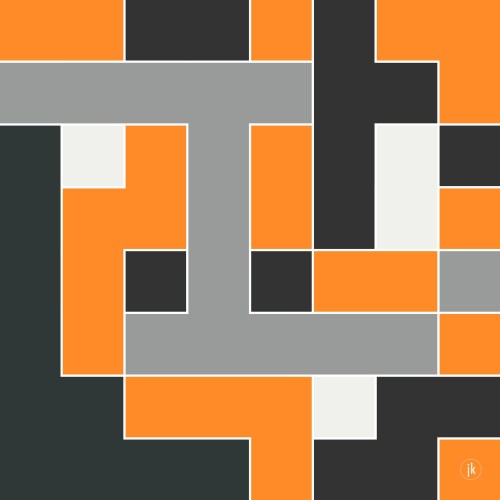
© Jack Kruf (2019) Climate change [fine art print, 1/1, sold]. Tilburg: private collection.

Following the Sustainable Development Goals, climate change is despite Covid-19 not forgotten. More so, the last is seen by scientists, managers and experts as an omen what we can expect when we keep disrupting the Earth ecosystem. Goal 13 is Climate Action: Take urgent action to combat climate change and its impacts. This goal has 5 targets:

    • Strengthen resilience and adaptive capacity to climate-related hazards and natural disasters in all countries.
    • Integrate climate change measures into national policies, strategies and planning.
    • Improve education, awareness-raising and human and institutional capacity on climate change mitigation, adaptation, impact reduction and early warning.
    • Implement the commitment undertaken by developed-country parties to the United Nations Framework Convention on Climate Change to a goal of mobilizing jointly $100 billion annually by 2020 from all sources to address the needs of developing countries in the context of meaningful mitigation actions and transparency on implementation and fully operationalize the Green Climate Fund through its capitalization as soon as possible.
    • Promote mechanisms for raising capacity for effective climate change-related planning and management in least developed countries and small island developing States, including focusing on women, youth and local and marginalized communities.

My personal expression of climate change is displayed above. I imagined the canvas of our world as a chess board with 8*8 fields and estimated the relatively most hurt ecosystems due to this change: coral reef (Pantone Living Coral ) and tropical rainforest (Pantone Forest Biome).

Government (Pantone Imperial Blue) is in fact a tiny spot on the canvas because it is doing not that much to tackle or change course. Most of the public leaders are still in denial or have no idea how to come into action. And we as citizens are not active either and go on with daily life. Storm (Pantone Storm Gray) is coming.

It is a personal art impression – or maybe better: an expression of an impression – to remind me that we will loose precious life if we continue this way. The present myriad of life is still so abundant in coral reefs and tropical rainforests, we can hardly imagine.

If you have seen these ecosystems, you understand and fall in love immediately. And if this happens there is not turning back, you want to protect and want to stay it forever to be there. I am in love, still (it is actually since 1977, the year I met (my) Professor Roelof Oldeman and with him did my first discoveries in and of the forest).

I am a realist, not a pessimist. I hear you thinking. But I did my homework as Wageningen University ecologist. Believe me, storm is coming, if we keep sitting on our hands. Maybe this small (art) expression is a small contribution to one of the targets of this sustainable development goal.

The colours of climate change will change over time. The coral reef and rainforest colours will disappear over time. A lot of gray will come in and the tiny spots of goverment remain insignificant as they are now,  I’m afraid. The driving political landscape is too dominant, too volatile and too focused on short term gains and profits. Remember I am not a pessimist, but a realist. The scientist in me remains. I like the colours. I hope they stay.