
Hans Redert en Jack Kruf
Pippi Langkous is ons idool, omdat zij altijd het volle vertrouwen in alles heeft. Zij neemt vanuit haar woonhuis Villa Kakelbont vrienden en vriendinnen mee in nieuwe avonturen, die altijd goed aflopen. Dat is mooi.
Haar lijfspreuk: “Ik heb het nog nooit gedaan, dus ik denk dat ik het wel kan.”
Voor politici, bestuurders, managers, organisaties, bedrijven en burgers kan het denken en handelen vanuit deze lijfspreuk een frisse wind doen waaien door de gestaalde kaders en afgebakende silo’s. Het kan de angsten verdrijven en nieuwe hoop geven op snelle oplossingen. En er liggen bovendien nogal wat maatschappelijke vraagstukken op ons bordje, die redelijk nieuw zijn en die we nog nooit gedaan hebben.
Wij denken aan Pippi Langkous. Ideaal concept ook voor een training in het openbaar bestuur, zo lijkt het de Heren van Oranje toe.
Sharing knowledge
Lucius Annaeus Seneca:
“Nothing will ever please me, no matter how excellent or beneficial, if I must retain the knowledge of it to myself… and if wisdom were given me under the express condition that it must be kept hidden and not uttered, I should refuse it… No good thing is pleasant to possess, without friends to share it”.
* Letters from a Stoic
Bees & Government
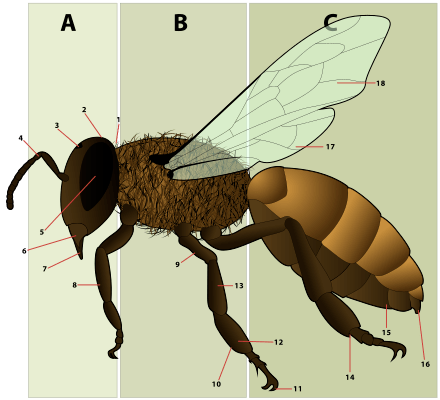
“Honey bees are brilliant at collective decision making”, according biologist Thomas B. Seeley on the Harvard Business Review Blog. It is evident that all leaders can learn from the way bees communicate, debate and decide. How to mobilise all available knowledge, expertise, insights, views and opinions within the organisation in the process of choosing the right direction. This is all about strategy. In its highest form. The bees seem to be masters in this.
Seeley lines out the next crucial factors for optimal decision making:
- Remind the group’s members of their shared interests and foster mutual respect, so they work together productively.
- Explore diverse solutions to the problem, to maximize the group’s likelihood of uncovering an excellent option.
- Aggregate the group’s knowledge through a frank debate.
- Minimize the leader’s influence on the group’s thinking.
- Balance interdependence (information sharing) and independence (absence of peer pressure) among the group’s members.
The boundaries between ecology and public governance seem to fade here by cross-overs like this study. Not so surprising. After all we can learn from governing systems in nature. The good news is that the knowledge of ecosystems is more and more entering the world of managers. This bee-example is ‘proven technology’ after all and ‘polished’ during millions of years. As if it is ISO Certified and ready for implementing in our public and private organisations . Maybe we can learn from the bees in finding our way out of the financial, social and economic crisis. Read more >
Ideas…
Inventor and businessman Thomas Edison:
“Ideas without execution are hallucinations.”
From Tree to Shining Tree
A forest can feel like a place of great stillness and quiet. But if you dig a little deeper, there’s a hidden world beneath your feet as busy and complicated as a city at rush hour.
In this story, a dog introduces us to a strange creature that burrows beneath forests, building an underground network where deals are made and lives are saved (and lost) in a complex web of friendships, rivalries, and business relations. It’s a network that scientists are only just beginning to untangle and map, and it’s not only turning our understanding of forests upside down, it’s leading some researchers to rethink what it means to be intelligent.
Produced by Annie McEwen and Brenna Farrell. Special Thanks to Latif Nasser, Stephanie Tam, Teresa Ryan, Marc Guttman, and Professor Nicholas P. Money at Miami University.
Listen
“Suzanne Simard:
The fungus has this incredible network of tubes that it’s able to send out through the soil, and draw up water and mineral nutrients that the tree needs.
Latif:
Wait. I thought, I thought tree roots just sort of did, like, I thought, I always imagined tree roots were kind of like straws. Like, the tree was, like, already doing that stuff by itself, but it’s the fungus that’s doing that stuff?
Jennifer:
Yes, in a lot of cases it is the fungus. Because tree roots and a lot of plant roots are not actually very good at doing what you think they’re doing.
Robert Krulwich:
She says the tree can only suck up what it needs through these — mostly through the teeny tips of its roots, and that’s not enough bandwidth.
Jad A.:
Wait. So, okay. So the fungus is giving the tree the minerals.
Robert Krulwich:
Yeah.
Jad A.:
What is the tree given back to the fungus?
Robert Krulwich:
Remember I told you how trees makes sugar?
Jad A.:
Yeah.
Robert Krulwich:
So that’s what the tree gives the fungus. Sugar.
Jennifer:
The fungi needs sugar to build their bodies, the same way that we use our food to build our bodies.
Suzanne Simard:
They can’t photosynthesize. They can’t take up CO2. And so they have this trading system with trees.”
 Kruf Huyssons