Climate Book

We still have time to change the world. From Greta Thunberg, the world’s leading climate activist, comes the essential handbook for making it happen. It is published by Allen Lane, Penguin Random House.

You might think it’s an impossible task: secure a safe future for life on Earth, at a scale and speed never seen, against all the odds. There is hope – but only if we listen to the science before it’s too late.

In The Climate Book, Greta Thunberg has gathered the wisdom of over one hundred experts – geophysicists, oceanographers and meteorologists; engineers, economists and mathematicians; historians, philosophers and indigenous leaders – to equip us all with the knowledge we need to combat climate disaster.

The crisis cannot be addressed, she writes, without talking about ‘morality, justice, shame, responsibility and guilt’

Alongside them, she shares her own stories of demonstrating and uncovering greenwashing around the world, revealing how much we have been kept in the dark. This is one of our biggest challenges, she shows, but also our greatest source of hope. Once we are given the full picture, how can we not act? And if a schoolchild’s strike could ignite a global protest, what could we do collectively if we tried?

We are alive at the most decisive time in the history of humanity. Together, we can do the seemingly impossible. But it has to be us, and it has to be now.

“One phrase from entomologist Dave Goulson seems to summarise all 464 pages: “It is not quite too late.” Emphasis on the quite.”

The last quote is from the Professor of Biology at University of Sussex, specializing in bee ecology, in the essay The Climate Book, created by Greta Thunberg review – an angry call for action by  for the Guardian.

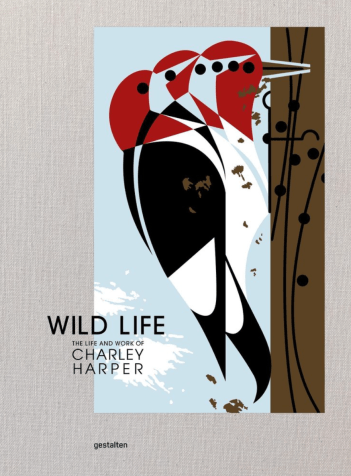
Wild life

Ladybugs, dogs, owls, otters: Charley Harper’s geometric illustrations are more than a source of delight. With a never-ending curiosity for the natural world, especially for wildlife and flora, Harper developed a unique style that influenced generations of artists and designers.

Wild Life: the life and work of Charley Harper, published by Gestalten, celebrates the centenary and legacy of Charley Harper, a master of midcentury American illustration: a vast collection of works originally created as posters, magazine covers, murals, and more.

Compiled by design writer Margaret Rhodes and the artist’s son, Brett Harper, this definitive monograph offers a glimpse into Harper’s creative universe and considers him anew in different contexts: as a student, a professional artist, a husband, an honorary naturalist, and a conservationist.

Telling the story of his life and of his masterpieces, Wild Life is essential for enthusiasts of the American master and for anyone interested in midcentury visual culture.

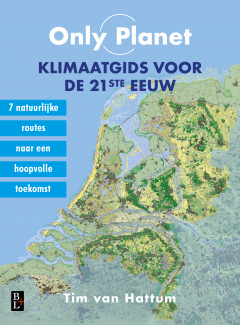
Only Planet

DKlimaatgids voor de 21e eeuw is samengesteld door Tim van Hattum, programmaleider klimaat aan de Wageningen University & Research. Het is een uitgave van Bertram + de Leeuw.

Het is een gids vol ideeën voor actie op het gebied van klimaat. Het etaleert dat veel van wat wij nodig hebben aan technieken om te veranderen in feite beschikbaar is. Vraag die opkomt bij het lezen: als wij alle kennis en kunde in huis hebben, waarom zijn wij collectief dan zo lethargisch, gelaten, afwachtend en doen wij zo weinig om de wenteling op te pakken door te voeren?

De auteur over het boek:

“We staan aan het begin van de avontuurlijkste reis die de mensheid ooit zal maken. Een reis naar een groenere toekomst voor onze planeet, de ‘only planet’ die we hebben. Klimaatverandering én het verlies aan biodiversiteit zijn de grootste uitdagingen van onze tijd. We worden de laatste jaren steeds vaker overspoeld met doemscenario’s en beelden van overstromingen, extreme droogte en bosbranden. Maar er is geen tijd om te wanhopen. Het is tijd voor actie.

Het goede nieuws is dat de meeste oplossingen om klimaatverandering aan te pakken al beschikbaar zijn. De belangrijkste oplossing is om onze samenleving meer in balans te brengen met de natuur. Als we beter gaan samenwerken met de natuur én op grote schaal slimme technologie inzetten, ziet onze toekomst er weer hoopvol uit. Dit boek neemt je – in zeven routes – mee op reis naar inspirerende voorbeelden in de wereld en laat zien dat die transitie al volop in beweging is.

Deze klimaatgids boordevol oplossingen voor de 21ste eeuw inspireert je om mee te bouwen aan een hoopvolle toekomst.”

De gids is een oproep met zeer goed onderbouwde kennis op feiten, routes en oplossingen. Het boek kan en zal stimuleren. Overzicht is fijn. Het is in die zin om blij van te worden omdat de auteur laat zien hoe wij grip kunnen krijgen door het heft in handen kunnen nemen. De vraag is wie doet wat daarbij.

Wageningen Climate Solutions

Wat in de gids onderbelicht blijft is hoe de noodzakelijke acties in de wereld van politiek-bestuurlijke dynamiek daadwerkelijk in gang kunnen worden gezet. De public governance voor de in het boek genoemde acties en daarbij het opheffen van blokkades vragen om uitwerking. Welke maatschappelijke, economische en financiële mechanismen met hun feed-back-loops kunnen daadwerkelijk op korte termijn in werking worden gezet. Een hoofdstuk over private  én politiek-bestuurlijke sturing zou de gids zeer completeren.

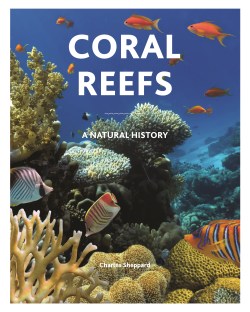
Coral Reefs: A Natural History

An illustrated look – by Professor Charles Sheppard and published by Princeton University Press – at corals and the reefs they build around the world, and the causes and dire consequences of their rapid disappearance.

Corals are among the most varied lifeforms on Earth, ranging from mushroom corals and leather corals to button polyps, sea fans, anemones, and pulse corals.

Bridging the gap between plant and animal, these marine invertebrates serve as homes to reef fish and share symbiotic relationships with photosynthesizing algae, which provide corals with their nourishment.

This stunningly illustrated book profiles the astonishing diversity of the world’s coral groups, describing key aspects of their natural history and explaining why coral reefs are critical to the health of our oceans.

Representative examples of corals have been selected to illustrate the broad range of species, and the book’s lively and informative commentary covers everything from identification to conservation, making it an essential resource for marine biologists, divers, and anyone who is fascinated by these remarkable sea creatures.

    • Features more than 200 exquisite color photos
    • Highlights key aspects of corals and their natural history
    • Features representative examples from around the world
    • Includes photos of rare and unusual species

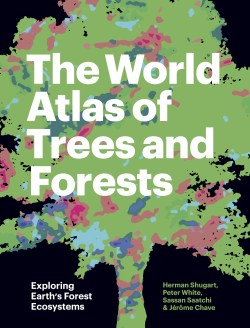
The World Atlas of Trees and Forests

This book is noteworthy. The World Atlas of Trees and Forests: Exploring Earth’s Forest Ecosystems by Herman Shugart, Peter White, Sassan Saatchi, and Jérôme Chave. It is a marvelously illustrated look at the world’s diverse forests and their ecosystems, published by Princeton University Press.

The earth’s forests are havens of nature supporting a diversity of life. Shaped by climate and geography, these vast and dynamic wooded spaces offer unique ecosystems that shelter complex and interdependent webs of flora, fungi, and animals.

The World Atlas of Trees and Forests offers a beautiful introduction to what forests are, how they work, how they grow, and how we map, assess, and conserve them. It contains things of need to know. And of course the wisdom Hallé, Oldeman, and Tomlinson:

“A third insight into tree forms comes from the work of Hallé, Oldeman, and Tomlinson. Their scheme overlaps with some features of Corner’s rules in that it is particularly concerned with the pattern of branching. It is distinctive, though, in its emphasis on dynamics of development from seed to adult plant, its emphasis on the spatial position of growing points that produce branching, and its inclusion of where and how reproductive structures are produced. The authors described 23 models for the development of tree forms, naming each for a prominent botanist. Taking the palm form (single unbranched, thick stems and many large leaves) as an extreme in Corner’s rules. They named it Corner’s model.”

The book:

    • Provides the most wide-ranging coverage of the world’s forests available.
    • Takes readers beneath the breathtaking variety of wooded canopies that span the globe.
    • Profiles a wealth of tree species, with enlightening and entertaining natural-history highlights along the way.
    • Features stunning color photos, maps, and graphics.
    • Draws on the latest cutting-edge research and technology, including satellite imagery.