


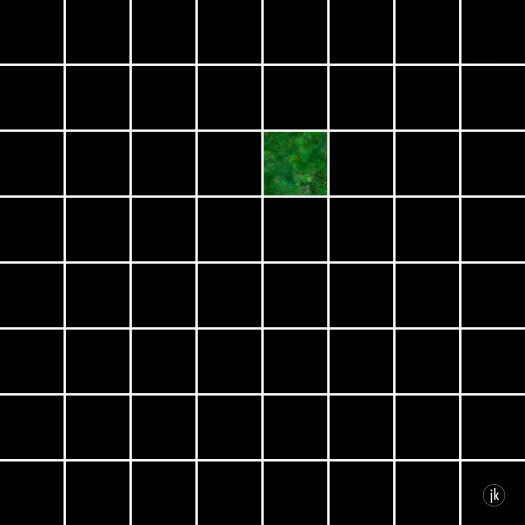
Once, a pristine forest was covering the earth. The total area is highly reduced. Recall the forest is essential in an overall humanly steered system world. Let us not forget.


The diversity in the city is noteworthy. Many communities live side by side, each having fibres and fragrances. For public governance, it is essential to respect them and take care of a wide range of policy-making and implementation.
Kruf, J. (2023) Diversity in the City [digital art print]. Breda: Private collection.


The story behind
Once a pristine and unique ecosystem, the Serengeti in Tanzania, where many animals live, meet and breed. Balanced, rich and telling the storing of our planet from ancient times on.
Now the immense grasslands (green) are step by step, disturbed by more tourist roads (white), system borders (black) and settlings (red). It is increasingly coming under pressure. This unique ecosystem is literally cut into pieces. An art expression.
This rectangle archival pigment print of the city canvas with Pantone® colours Black 6c, High Risk Red and Grass Green is perfect for a modern, classic and reflective look in home and office interiors. It is a reminder of how one of the most pristine and key natural ecosystems in the world is on the brink of devaluation.


Climate change is present everywhere. It is in all the headlines now. From the eagle (or International Space Station) perspective, one can sense the significant impact of it. The ecosystems of coral reefs and forests are mostly affected. Ice sheets melt everywhere, and storms rage in our homes and cities. Their colours dominate the landscape.
What stands out is the small blue square. That is government. In fact, it is us. Doing not that much to prevent, adapt and redirect this change. A small blue dot within our blue marble Earth. An art expression.
This rectangle archival pigment print of the city canvas with Pantone® colours Forest Biome, Living Coral, Snow White and Storm Gray is perfect for a modern, classic and reflective look in home and office interiors. It is an urgent reminder of climate change hurting our pristine and critical natural ecosystems and our present small effort to prevent and react.
 Kruf Huyssons