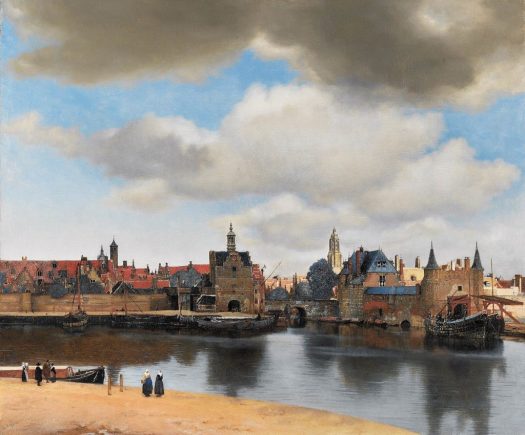
Vermeer, Johannes (1660-1661) View on Delft [oil on canvas]. The Hague: Mauritshuis.This painting of the city of Delft made around 1660, is from the master hand of Johannes Vermeer. More than inspiring. A place to live. Around 360 years back in time. With View of Delft, Vermeer created an iconic image of the city: the city as an entity, the city as an ecosystem.The overarching cloudy sky gives the city the insight and dimension that it is part of a larger world, maybe that of nature. It puts Delft in perspective. It humbles. At the same time, the citizens in the foreground remind you as a watcher that the painting is also about everyday life. It sketches the city itself as comprehensive and offering a higher dimension to its inhabitants. That of a place where you may belong, where you can live, love, meet and work.View on Delft is a holistic image in which Vermeer shows us the multiple layers of the ecosystem ‘city’: citizen, group, street, neighbourhood and city. In ecological terms, he shows organisms, groups, niches, habitats and systems at the same time. And that under the clouds of a much larger dimension, the sky, the world. A masterpiece.
An interesting analysis by Christopher Volpe: “Marcel Proust thought View of Delft by Vermeer the most beautiful picture in the world. It’s been called a perfect painting, and whether or not you agree, the artist’s picture of his hometown assuredly does repay close looking.” Read more
Het publieke domein kan worden beschouwd als het stedelijk canvas dat plaats biedt aan een samenspel van burgers, bedrijven, maatschappelijke organisaties, overheden en de omringende omgeving. Of ook als de dynamiek van rijk geschakeerde beelden en geluiden.
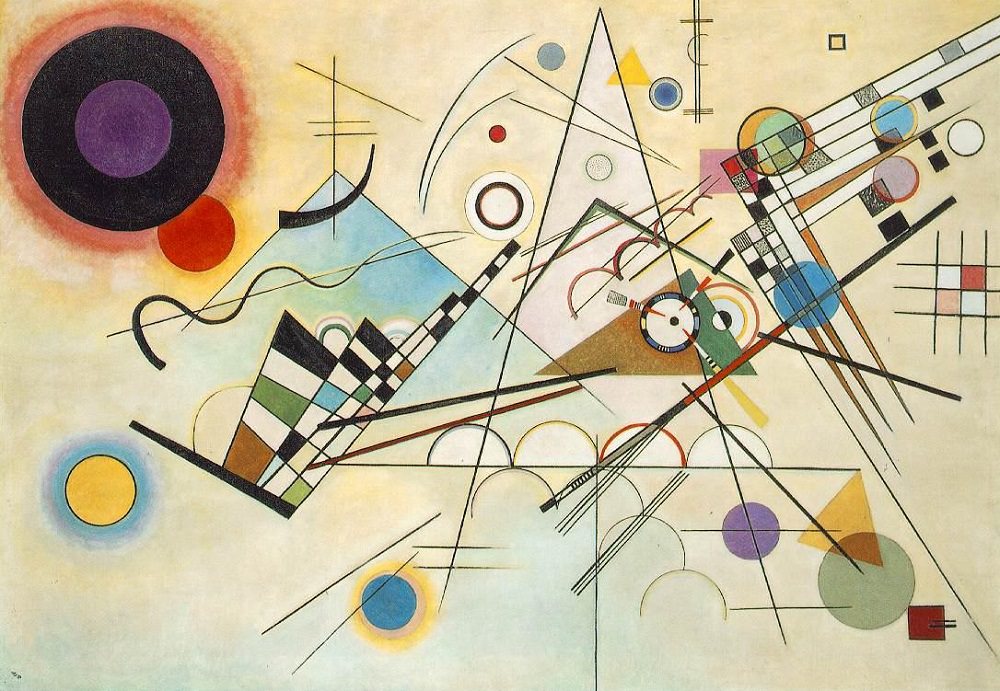
De dynamiek van het publieke domein zou in ‘Composition VIII’ door Wassily Kandinsky in 1923 tot leven kunnen zijn gebracht. Hij was er in zijn wezen op gericht een abstracte taal te ontwikkelen die sterke emoties kon oproepen net zoals de muziek dat kon doen: “Form itself, even if completely abstract … has its own inner sound,” schreef hij.
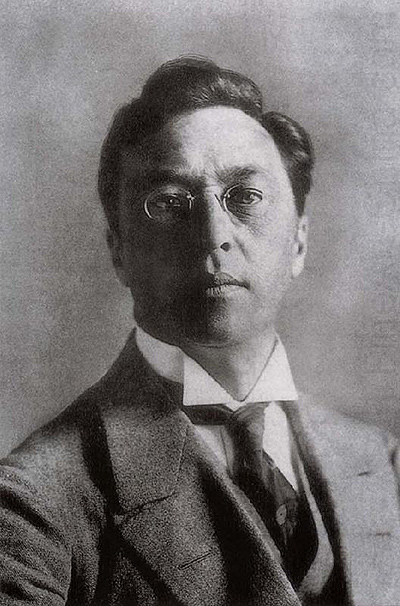
Wasilly Kandinsky
Kandinsky was op zoek naar een universele harmonieleer in de visuele kunsten, dat aan de basis van elk werk zou moeten liggen. Een haast mystiek geloof dat werd versterkt door overtuigende innerlijke kracht van de schilder: “Color is the keyboard, the eyes are the hammers, the soul is the piano with many strings. The artist is the hand that plays, touching one key or another purposely, to cause vibrations in the soul.” (Kandinsky in Thornwillow republication)
Kandinsky, V. (2013) Effect of Color. Newburgh, NY: Thornwillow Press. A republication of Kandinsky, V. (1911) Concerning the Spiritual in Art.
Het publieke domein kan worden beschouwd als het stedelijk canvas dat plaats biedt aan een samenspel van burgers, bedrijven, maatschappelijke organisaties, overheden en de omringende omgeving. Of ook als de dynamiek van rijk geschakeerde beelden en geluiden.
De dynamiek van het publieke domein zou in ‘Composition VIII’ door Wassily Kandinsky in 1923 tot leven kunnen zijn gebracht. Hij was er in zijn wezen op gericht een abstracte taal te ontwikkelen die sterke emoties kon oproepen net zoals de muziek dat kon doen: “Form itself, even if completely abstract … has its own inner sound,” schreef hij.
Kandinsky was op zoek naar een universele harmonieleer in de visuele kunsten, dat aan de basis van elk werk zou moeten liggen. Een haast mystiek geloof dat werd versterkt door overtuigende innerlijke kracht van de schilder: “Color is the keyboard, the eyes are the hammers, the soul is the piano with many strings. The artist is the hand that plays, touching one key or another purposely, to cause vibrations in the soul.” (Kandinsky in Thornwillow republication)
Composition VIII (1923) Wassily Kandinsky
Bibliografie
Kandinsky, V. (2013) Effect of Color. Newburgh, NY: Thornwillow Press. A republication of Kandinsky, V. (1911) Concerning the Spiritual in Art.
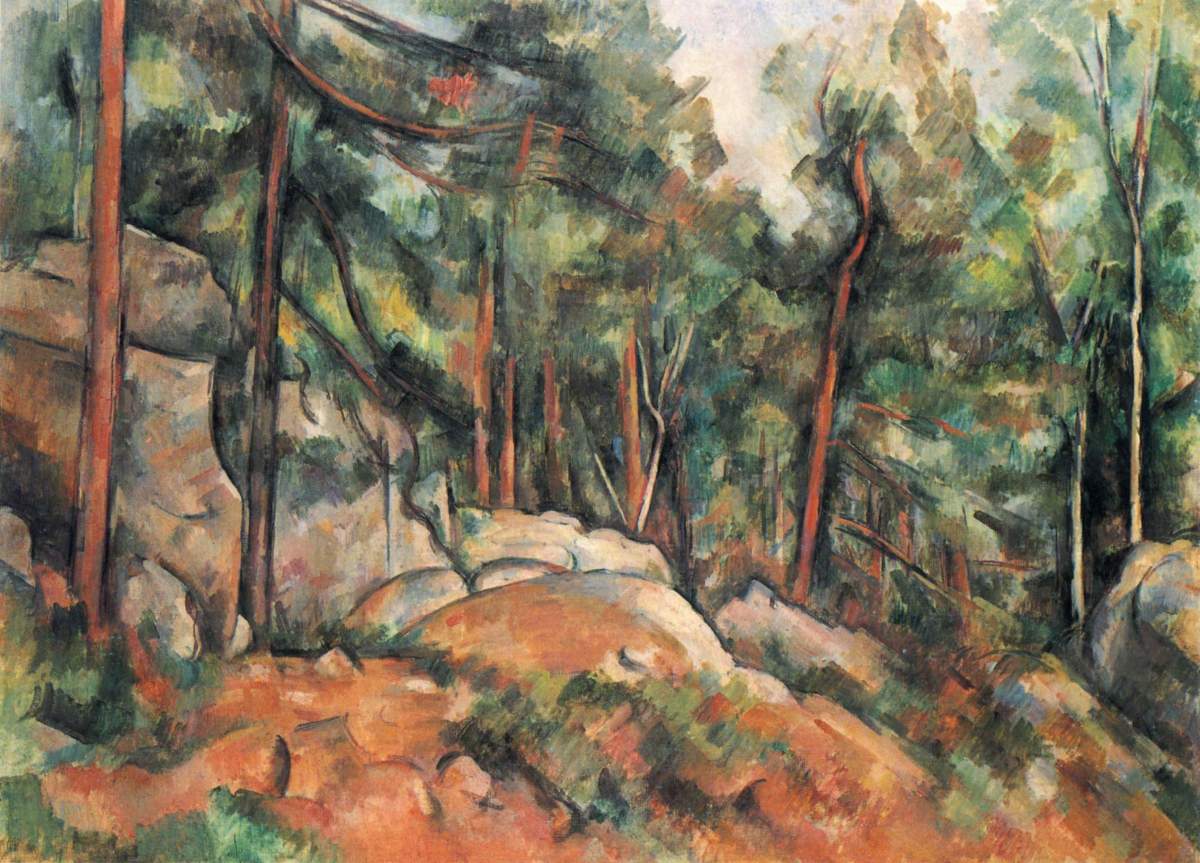
Paul Cézanne (1898-1999) Intérieur de Forêt [oil on canvas]. Fine Arts Museums of San Francisco.
Een blik op het interieur van een organisatie kan inzicht geven hoe zij er echt bijstaat. Zij dient in overheidsland de democratische principes van transparantie, rechtmatigheid, verantwoording en aansprakelijkheid richting de burger. Zij kan ex ante zijn, maar ook ex post als gelijk welk bestuur verantwoording aflegt aan haar burgers of klanten in bijvoorbeeld een jaarverslag. Het is een vak omdat je moet weten welke indicator iets zegt over wat. Het oog moet precies zijn, de kennis voor uitleg en interpretatie aanwezig.
Een voorbeeld van een voortreffelijke blik op een interieur, in dit geval van een bos in het Parc du Château Noir in de provincie Aix-en-Provence door Paul Cézanne – onderweg tussen impressionisme en kubisme. Het kan dienen als illustratie hoe essentieel en verfijnd die blik kan zijn.
Dit schilderij is één van de meesterwerken hier gemaakt. De serie wordt wereldwijd geroemd om haar precisie in sfeer, atmosfeer en kleurstelling. Het zijn als ware transecten, doorsneden, die ons vertellen in welke fase het bos zich bevindt, hoe oud het bos is, hoe haar structuur, welke boomsoorten er groeien en hoe de groeiomstandigheden zijn.
Kan het een inspiratie zijn om voortaan (naast een woordenpalet) een kleurenpalet toe te voegen aan elk jaarverslag? Met één blik het interieur vangen. Indien zo, laat dan Cézanne dé inspirators zijn, de meester van de diagnose.
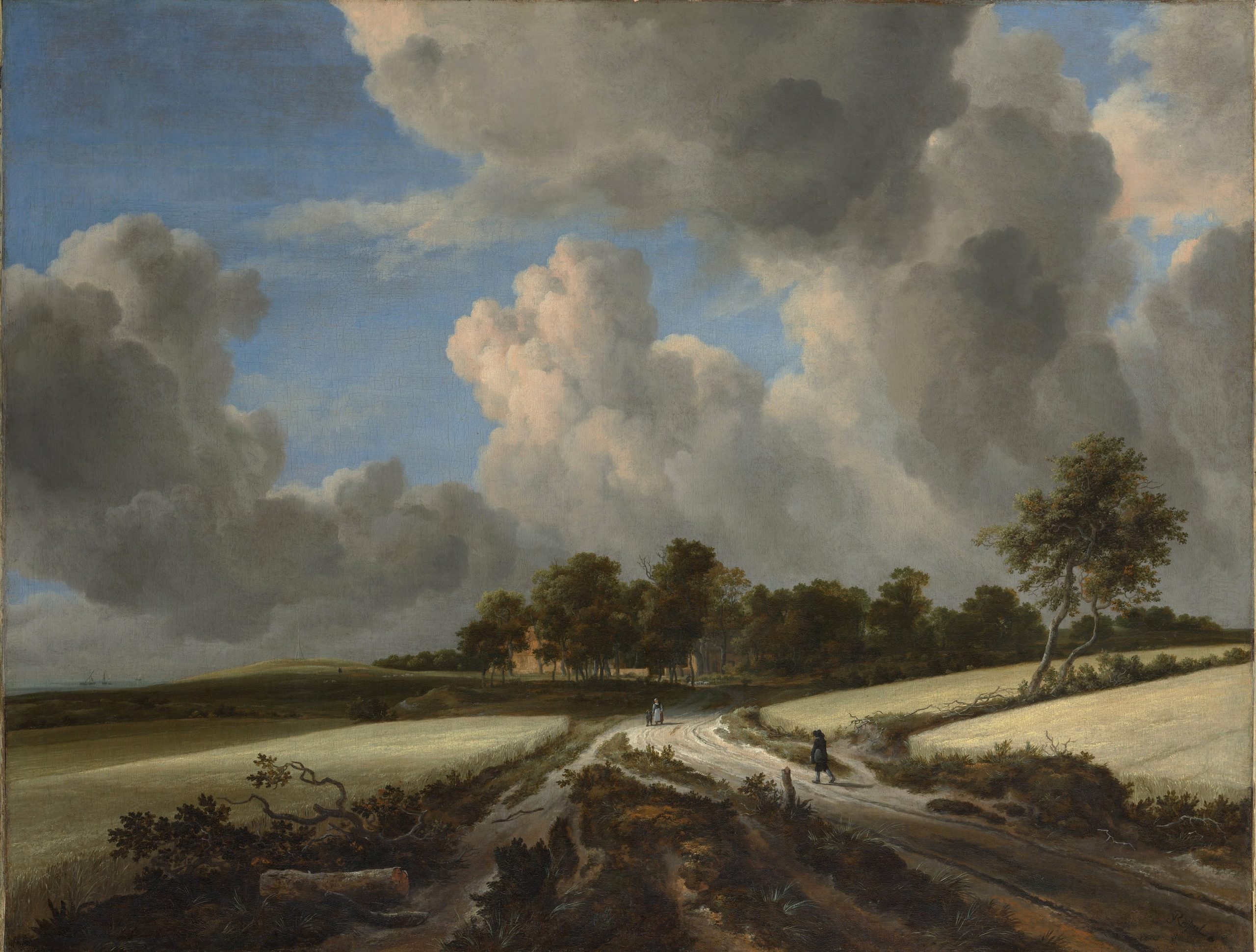
Jacob van Ruisdael (1670). Wheat Fields [Oil on canvas, 100 x 130.2 cm]. New York: Metropolitan Museum of Art.Een luchtje scheppen is goed, zeker na een week CNN #ElectionDay. Ik moest denken aan mijn laatste bezoek aan New York, toen ik oog in oog stond met deze Van Ruisdael (met daarna een rondje Central Park). Het is vandaag de combinatie van het gevoel van deel zijn van een veel groter geheel, uitwaaien, op adem komen, een frisse neus halen en reflectie. Het is vandaag, zondag ook, een echte Van Ruisdael-dag.


 Kruf Huyssons