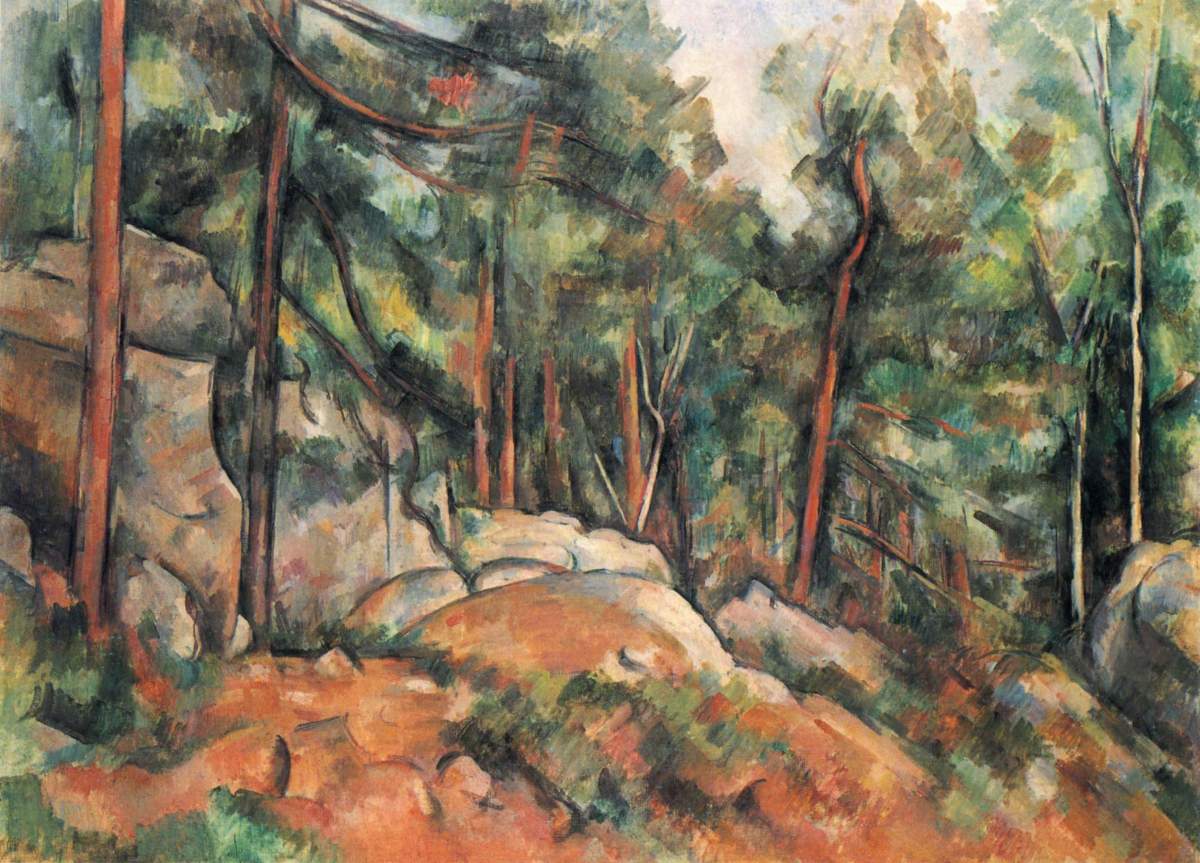
Intérieur de Forêt

Interieur_de_foret_par_Paul_Cezanne_Yorck
Paul Cézanne (1898-1999) Intérieur de Forêt [oil on canvas]. Fine Arts Museums of San Francisco.


Een blik op het interieur van een organisatie kan inzicht geven hoe zij er echt bijstaat. Zij dient in overheidsland de democratische principes van transparantie, rechtmatigheid, verantwoording en aansprakelijkheid richting de burger. Zij kan ex ante zijn, maar ook ex post als gelijk welk bestuur verantwoording aflegt aan haar burgers of klanten in bijvoorbeeld een jaarverslag. Het is een vak omdat je moet weten welke indicator iets zegt over wat. Het oog moet precies zijn, de kennis voor uitleg en interpretatie aanwezig.

Een voorbeeld van een voortreffelijke blik op een interieur, in dit geval van een bos in het Parc du Château Noir in de provincie Aix-en-Provence door Paul Cézanne – onderweg tussen impressionisme en kubisme. Het kan dienen als illustratie hoe essentieel en verfijnd die blik kan zijn.

Dit schilderij is één van de meesterwerken hier gemaakt. De serie wordt wereldwijd geroemd om haar precisie in sfeer, atmosfeer en kleurstelling. Het zijn als ware transecten, doorsneden, die ons vertellen in welke fase het bos zich bevindt, hoe oud het bos is, hoe haar structuur, welke boomsoorten er groeien en hoe de groeiomstandigheden zijn.

Kan het een inspiratie zijn om voortaan (naast een woordenpalet) een kleurenpalet toe te voegen aan elk jaarverslag? Met één blik het interieur vangen. Indien zo, laat dan Cézanne dé inspirators zijn, de meester van de diagnose.

Van Ruisdael dag

ruisdael_d-scaled
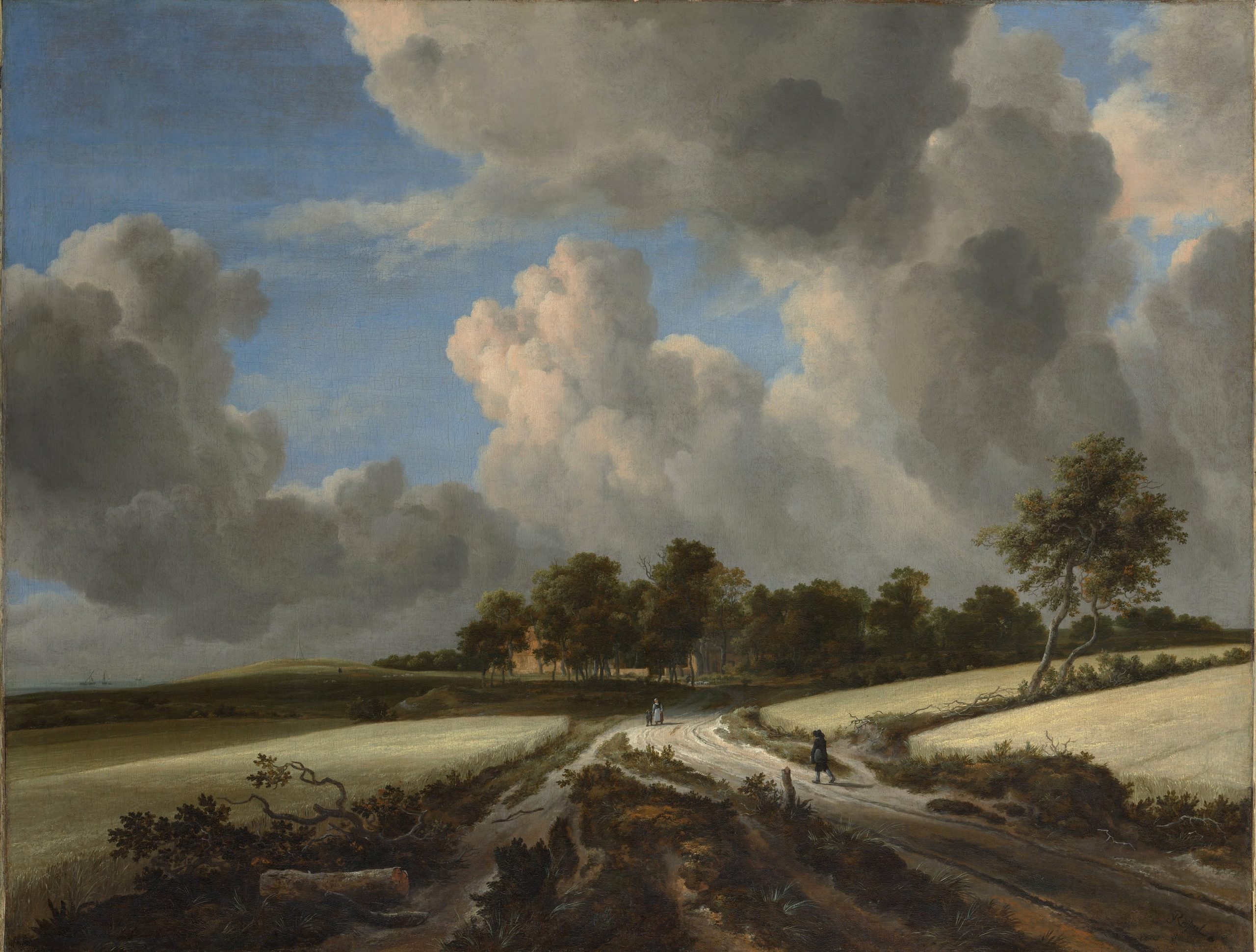
Jacob van Ruisdael (1670). Wheat Fields [Oil on canvas, 100 x 130.2 cm]. New York: Metropolitan Museum of Art.
Een luchtje scheppen is goed, zeker na een week CNN #ElectionDay. Ik moest denken aan mijn laatste bezoek aan New York, toen ik oog in oog stond met deze Van Ruisdael (met daarna een rondje Central Park). Het is vandaag de combinatie van het gevoel van deel zijn van een veel groter geheel, uitwaaien, op adem komen, een frisse neus halen en reflectie. Het is vandaag, zondag ook, een echte Van Ruisdael-dag.

Trees & Undergrowth

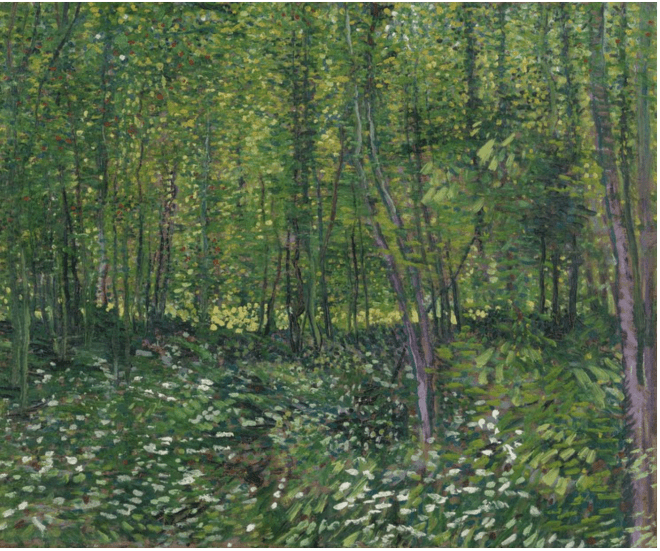
Gogh, V. van (1887). Trees and Undergrowth [oil on canvas]. Amsterdam: Van Gogh Museum.
This painting by Vincent van Gogh is one of several paintings of trees and undergrowth, a genre called “sous-bois” brought into prominence by artists of the Barbizon School and Impressionists.

This work use shades of color and light in the forest interior painting. Vincent walked into the forest for a close view. The painting evokes the trees and grassy undergrowth, the sky is barely visible, just a glimpse of sky sometimes penetrating the branches.

‘Rye’, last remains of a forest

From the perspective of the forest A Rye Field by Ivan Shishkin evokes an ambiguous feeling. This is a great work of art, that in the first place. It contains artistically beauty, power and mystery in one.

The powerful pines and the endless fields of golden corn give the viewer a colour palette, detail and dimension with a great realistic and an almost 3-dimensional experience. As if one is on the place of action, 142 years back in time, somewhere in a vast Russian landscape, in another time and in another life.

The second mind comes in though, that from forest and true ecological perspective. As if I was the forest, speaking out. Was this painting an early warning that humans were aiming and heading to took all of the land, for rhymes and reasons, and destroy the sheer beauty of the forest ecosystem and all lives within it? Sure it was.

This painting really evokes two moods: that of romantic view and sheer beauty of composition, colour and craftsmanship and that of great loss at the same time.

Strange what history can do with perception and judgement. At least mine. The message of ‘Rye’ is more actual than ever. This painting should be a constant reminder of our not sustainable and therefor simplistic way of thinking. We can do better than this.

Bibliography 

Shishkin, Ivan (1878) Rye [Oil on canvas]. Moscow: The Tretyakov Gallery.

Back to the drawing table

Anonymus, Couperin [Oil on canvas]. Château de Versailles. Paris.

Reading the Global Risks Report 2020 of the World Economic Forum last week and quietly listening to all the presentations, I went back to my trusted base, platform, home… the piano, with François Couperin. On this late winter afternoon I imagined that my left hand played the system world and my right the living world. Les ombres errantes is actually as it should be.

With this architectural masterpiece in mind we should go back to the drawing table and redesign how we, the world, manage ourselves to a new harmony, with full respect for all other species and natural ecosystems from which we developed. Mother Earth, our root system.

Børge Brende, President, World Economic Forum: ”On the environment, we note with grave concern the consequences of continued environmental degradation, including the record pace of species decline. Respondents to our Global Risks Perception Survey are also sounding the alarm, ranking climate change and related environmental issues as the top five risks in terms of likelihood—the first time in the survey’s history that one category has occupied all five of the top spots.

How can we forget? We can not continue this way! The report has a huge impact on me, that I know. François gives me a moment of relaxation, and by this of inspiration to rethink, to reflect, to re-prepare, to re-energize, to re-create, to re-select, to re-elect and to re-mark. Left and right hand as one, connecting ratio and creativity. Back to the drawing table.