
Jack Kruf
A biome can be defined (Campbell, 1996) as” a major community on earth with a predominant vegetation and adapted organisms to that particular environment.” In fact the biomes of the present world can be considered as our major natural habitats. It is where biotic and abiotic elements of the ecosystems meet. It is in fact the place where biodiversity and resilience are made and engineered (by nature).
I designed – with the golden ratio in mind – these set of biomic landscapes. The Pantone® colours are hand-picked, corresponding with the biomes, for accurate colour management and print reproduction.
For home and office
The biomes are designed for a broad use and can be printed in a wide range of dimensions, from postcard to ‘museum’ dimensions. Here you fine a selection for the application for gallery, hall, home, office, outdoor and public space. Showcasing them in rooms where people meet, raises the awareness of the treasuries of Mother Earth.
In the office you can express and communicate your core philosophy and business approach with your clients and customers. You can make a true statement with your wall-art.
My motto: “A wisdom on the wall is a window to the world”. Knowing where you are, is the first step towards proper navigation. Note: The colours in the slides may differ from those of the actual prints. Every design is available as an open edition print.



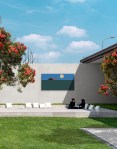
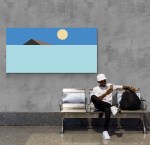



Arctic biome
The Arctic and Antarctic stretch out in the polar regions, consisting of frozen land and seas. It are unique area’s among Earth’s ecosystems, because of their cold and extreme conditions. Life includes organisms living in the ice, zooplankton and phytoplankton, fish and marine mammals, birds, land animals, plants and at the arctic also human societies. They belong to the arctic biome.
Coral reef (biome)
Coral reefs are in fact part of the marine biome, often called “rainforests of the sea”, and form some of Earth’s most diverse ecosystems. They occupy less than 0.1% of the world’s ocean area (half the area of France), yet provide a home for at least 25% of all marine species.
Desert biome
The desert is a region so arid because of little rainfall that it supports only sparse and widely spaced vegetation or no vegetation at all. It belongs to the desert biome.
Forest biome
This is a biological community that is dominated by trees and other woody vegetation. More than one half of tropical forests have already been destroyed. Only scattered remnants of original temperate forests remain. Current extensive logging in boreal forests may soon cause their disappearance. There are three major types of forests; tropical rainforest, temperate forest and boreal forest (taiga).
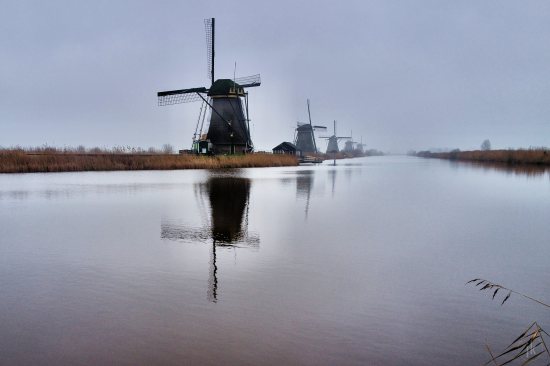
Freshwater biome
3% of earth’s water is freshwater and about 70% of that is sequestered in polar ice. There are wetlands inundated with water, streams and rivers with running water and ponds and lakes with accumulating water.
Grassland biome
Grasslands are characterized as lands dominated by grasses. Continental climate (hot and dry) is favourable for grasses rather than for large shrubs or trees. There are savannas, prairies and steppes.
Marine biome
The marine biome dominates the surface of the Earth, covering about three-quarters of the Earth’s surface area. The world’s oceans contain the richest diversity of species of any space on Earth. Rainwater for land areas is supplied by the evaporation of ocean waters. There are oceans, coral reefs, and estuaries.
Tundra biome
The tundra is characterized as lands with shrubby vegetation, composed of dwarf shrubs, sedges and grasses, mosses, and lichens, which is adapted to harsh conditions with an extremely cold climate. The biodiversity is low, there is poor nutrients availability and little precipitation with a short season (the Arctic summer) of growth and reproduction. There are alpine and arctic tundras.
Bibliography
Campbell, N. (1996) Biology 3th edn. California Menlo Park: The Benjamin/Cummings Publishing Company

 Kruf Huyssons