
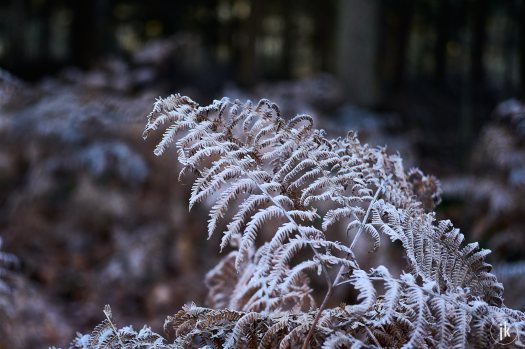
In winter the forest comes to a standstill and prepares for the year to come. This frosty fern is a witness of the quietness of ecosystem.
Forest floor palette
In early December, this is what this palette of the frosty forest floor is telling us. Quite a set of late autumn colours of lost leafs. They look up to where to came from, the high canopies.
We should be very thankful to them for their incredible service this season, this for their production of O2 (oxygen) and binding CO2 (carbondioxide), for their delivery of sugars for trees, fungi and animals, for filtering the dusty air.
Leafs are key for life. They actually are the master servants in the Empire of the Sun. Now they rest in peace on the forest floor, waiting to find their way in the circle of life. Winter is coming.
Picture: © Jack Kruf
December Forest
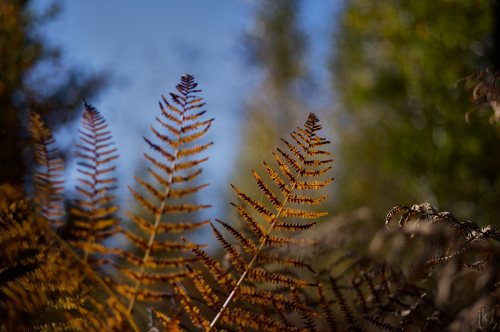
The forest at this time of the year seems to come to a standstill, leading to fascinating colour palettes. The whole forest ecosystem is in fact in full preparation for the year to come. Here the beautiful browns and yellows of the eagle fern (Pteridium aquilinum L.) at an open place in the forest.
Wild life
Ladybugs, dogs, owls, otters: Charley Harper’s geometric illustrations are more than a source of delight. With a never-ending curiosity for the natural world, especially for wildlife and flora, Harper developed a unique style that influenced generations of artists and designers.
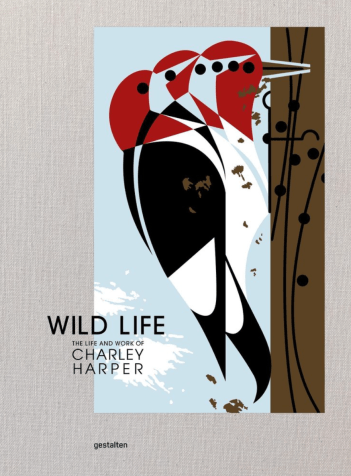
Wild Life: the life and work of Charley Harper, published by Gestalten, celebrates the centenary and legacy of Charley Harper, a master of midcentury American illustration: a vast collection of works originally created as posters, magazine covers, murals, and more.
Compiled by design writer Margaret Rhodes and the artist’s son, Brett Harper, this definitive monograph offers a glimpse into Harper’s creative universe and considers him anew in different contexts: as a student, a professional artist, a husband, an honorary naturalist, and a conservationist.
Telling the story of his life and of his masterpieces, Wild Life is essential for enthusiasts of the American master and for anyone interested in midcentury visual culture.
Coral Reefs: A Natural History
An illustrated look – by Professor Charles Sheppard and published by Princeton University Press – at corals and the reefs they build around the world, and the causes and dire consequences of their rapid disappearance.
Corals are among the most varied lifeforms on Earth, ranging from mushroom corals and leather corals to button polyps, sea fans, anemones, and pulse corals.
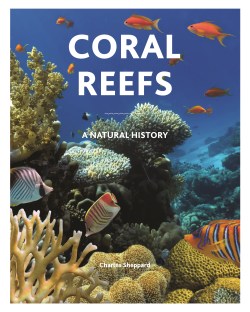
Bridging the gap between plant and animal, these marine invertebrates serve as homes to reef fish and share symbiotic relationships with photosynthesizing algae, which provide corals with their nourishment.
This stunningly illustrated book profiles the astonishing diversity of the world’s coral groups, describing key aspects of their natural history and explaining why coral reefs are critical to the health of our oceans.
Representative examples of corals have been selected to illustrate the broad range of species, and the book’s lively and informative commentary covers everything from identification to conservation, making it an essential resource for marine biologists, divers, and anyone who is fascinated by these remarkable sea creatures.
-
- Features more than 200 exquisite color photos
- Highlights key aspects of corals and their natural history
- Features representative examples from around the world
- Includes photos of rare and unusual species
 Kruf Huyssons