In early December, this is what this palette of the frosty forest floor is telling us. Quite a set of late autumn colours of lost leafs. They look up to where to came from, the high canopies.
We should be very thankful to them for their incredible service this season, this for their production of O2 (oxygen) and binding CO2 (carbondioxide), for their delivery of sugars for trees, fungi and animals, for filtering the dusty air.
Leafs are key for life. They actually are the master servants in the Empire of the Sun. Now they rest in peace on the forest floor, waiting to find their way in the circle of life. Winter is coming.
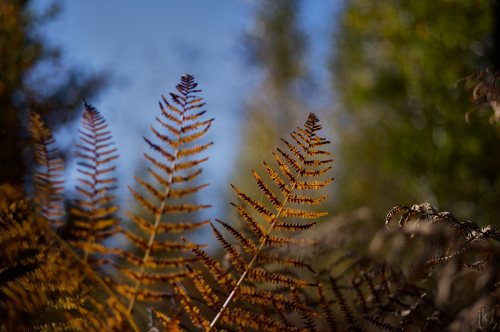
The forest at this time of the year seems to come to a standstill, leading to fascinating colour palettes. The whole forest ecosystem is in fact in full preparation for the year to come. Here the beautiful browns and yellows of the eagle fern (Pteridium aquilinum L.) at an open place in the forest.
Dit boek is een bron van inspiratie. Het is geschreven en samengesteld door Kimberly Ridley en is uitgegeven door Princeton Architectural Press. Het geeft op zeer beknopte wijze aan welke universele patronen in de natuur kunnen worden aangetroffen en welke taal de natuur spreekt. Het moedigt aan naar buiten te gaan en de wereld te ontdekken.
Wild Design onthult de wonderen van de natuurlijke wereld zoals nooit eerder gezien, door middel van de prachtige, buitengewone en functionele vormen gemaakt door dieren, planten en andere organismen overal om ons heen.
Kunst en wetenschap lopen mooi in elkaar over in deze fascinerende verkenning van structuren en vormen die in de natuur voorkomen, verteld door middel van levendige essays en meesterlijke vintage illustraties. Verlies jezelf in de betoverende microscopische “glazen” omhulsels van juweelachtige diatomeeën. Ga op in de mysterieuze ondergrondse schimmelnetwerken die het grote ontwerp van bossen vormgeven. Ontdek de verrassend ingewikkelde en gevarieerde nesten van vogels.
Wild Design herinnert ons eraan dat opmerkelijke fenomenen overal om ons heen voorkomen – we moeten alleen weten hoe we ze kunnen vinden.
A biome can be defined (Campbell, 1996) as” a major community on earth with a predominant vegetation and adapted organisms to that particular environment.” In fact the biomes of the present world can be considered as our major natural habitats. It is where biotic and abiotic elements of the ecosystems meet. It is in fact the place where biodiversity and resilience are made and engineered (by nature).
I designed – with the golden ratio in mind – these set of biomic landscapes. The Pantone® colours are hand-picked, corresponding with the biomes, for accurate colour management and print reproduction.
For home and office
The biomes are designed for a broad use and can be printed in a wide range of dimensions, from postcard to ‘museum’ dimensions. Here you fine a selection for the application for gallery, hall, home, office, outdoor and public space. Showcasing them in rooms where people meet, raises the awareness of the treasuries of Mother Earth.
In the office you can express and communicate your core philosophy and business approach with your clients and customers. You can make a true statement with your wall-art.
My motto: “A wisdom on the wall is a window to the world”. Knowing where you are, is the first step towards proper navigation. Note: The colours in the slides may differ from those of the actual prints. Every design is available as an open edition print.
Arctic biome
Coral reef (biome)
Desert biome
Forest biome
Freshwater biome
Grassland biome
Marine biome
Tundra biome
Arctic biome
The Arctic and Antarctic stretch out in the polar regions, consisting of frozen land and seas. It are unique area’s among Earth’s ecosystems, because of their cold and extreme conditions. Life includes organisms living in the ice, zooplankton and phytoplankton, fish and marine mammals, birds, land animals, plants and at the arctic also human societies. They belong to the arctic biome.
Coral reef (biome)
Coral reefs are in fact part of the marine biome, often called “rainforests of the sea”, and form some of Earth’s most diverse ecosystems. They occupy less than 0.1% of the world’s ocean area (half the area of France), yet provide a home for at least 25% of all marine species.
Desert biome
The desert is a region so arid because of little rainfall that it supports only sparse and widely spaced vegetation or no vegetation at all. It belongs to the desert biome.
Forest biome
This is a biological community that is dominated by trees and other woody vegetation. More than one half of tropical forests have already been destroyed. Only scattered remnants of original temperate forests remain. Current extensive logging in boreal forests may soon cause their disappearance. There are three major types of forests; tropical rainforest, temperate forest and boreal forest (taiga).
Freshwater biome
3% of earth’s water is freshwater and about 70% of that is sequestered in polar ice. There are wetlands inundated with water, streams and rivers with running water and ponds and lakes with accumulating water.
Grassland biome
Grasslands are characterized as lands dominated by grasses. Continental climate (hot and dry) is favourable for grasses rather than for large shrubs or trees. There are savannas, prairies and steppes.
Marine biome
The marine biome dominates the surface of the Earth, covering about three-quarters of the Earth’s surface area. The world’s oceans contain the richest diversity of species of any space on Earth. Rainwater for land areas is supplied by the evaporation of ocean waters. There are oceans, coral reefs, and estuaries.
Tundra biome
The tundra is characterized as lands with shrubby vegetation, composed of dwarf shrubs, sedges and grasses, mosses, and lichens, which is adapted to harsh conditions with an extremely cold climate. The biodiversity is low, there is poor nutrients availability and little precipitation with a short season (the Arctic summer) of growth and reproduction. There are alpine and arctic tundras.
Bibliography
Campbell, N. (1996) Biology 3th edn. California Menlo Park: The Benjamin/Cummings Publishing Company
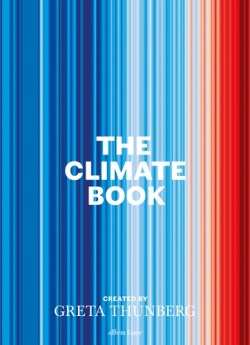
We still have time to change the world. From Greta Thunberg, the world’s leading climate activist, comes the essential handbook for making it happen. It is published by Allen Lane, Penguin Random House.
You might think it’s an impossible task: secure a safe future for life on Earth, at a scale and speed never seen, against all the odds. There is hope – but only if we listen to the science before it’s too late.
In The Climate Book,Greta Thunberg has gathered the wisdom of over one hundred experts – geophysicists, oceanographers and meteorologists; engineers, economists and mathematicians; historians, philosophers and indigenous leaders – to equip us all with the knowledge we need to combat climate disaster.
The crisis cannot be addressed, she writes, without talking about ‘morality, justice, shame, responsibility and guilt’
Alongside them, she shares her own stories of demonstrating and uncovering greenwashing around the world, revealing how much we have been kept in the dark. This is one of our biggest challenges, she shows, but also our greatest source of hope. Once we are given the full picture, how can we not act? And if a schoolchild’s strike could ignite a global protest, what could we do collectively if we tried?
We are alive at the most decisive time in the history of humanity. Together, we can do the seemingly impossible. But it has to be us, and it has to be now.
“One phrase from entomologist Dave Goulson seems to summarise all 464 pages: “It is not quite too late.” Emphasis on the quite.”









 Kruf Huyssons