Wild life

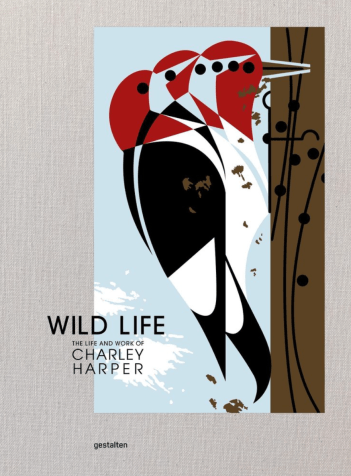
Ladybugs, dogs, owls, otters: Charley Harper’s geometric illustrations are more than a source of delight. With a never-ending curiosity for the natural world, especially for wildlife and flora, Harper developed a unique style that influenced generations of artists and designers.

Wild Life: the life and work of Charley Harper, published by Gestalten, celebrates the centenary and legacy of Charley Harper, a master of midcentury American illustration: a vast collection of works originally created as posters, magazine covers, murals, and more.

Compiled by design writer Margaret Rhodes and the artist’s son, Brett Harper, this definitive monograph offers a glimpse into Harper’s creative universe and considers him anew in different contexts: as a student, a professional artist, a husband, an honorary naturalist, and a conservationist.

Telling the story of his life and of his masterpieces, Wild Life is essential for enthusiasts of the American master and for anyone interested in midcentury visual culture.

Coral Reefs: A Natural History

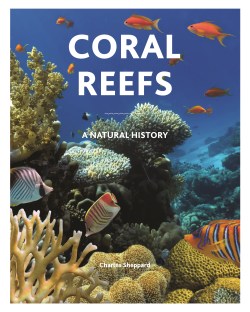
An illustrated look – by Professor Charles Sheppard and published by Princeton University Press – at corals and the reefs they build around the world, and the causes and dire consequences of their rapid disappearance.

Corals are among the most varied lifeforms on Earth, ranging from mushroom corals and leather corals to button polyps, sea fans, anemones, and pulse corals.

Bridging the gap between plant and animal, these marine invertebrates serve as homes to reef fish and share symbiotic relationships with photosynthesizing algae, which provide corals with their nourishment.

This stunningly illustrated book profiles the astonishing diversity of the world’s coral groups, describing key aspects of their natural history and explaining why coral reefs are critical to the health of our oceans.

Representative examples of corals have been selected to illustrate the broad range of species, and the book’s lively and informative commentary covers everything from identification to conservation, making it an essential resource for marine biologists, divers, and anyone who is fascinated by these remarkable sea creatures.

    • Features more than 200 exquisite color photos
    • Highlights key aspects of corals and their natural history
    • Features representative examples from around the world
    • Includes photos of rare and unusual species

Spider and I

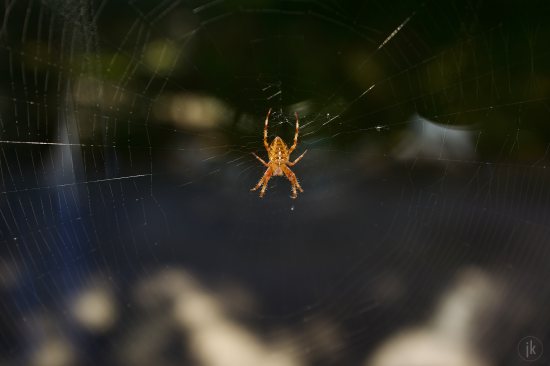
© Jack Kruf (2018) Spider and I. Breda: Private collection.

We meet every time of the year, at the crossroad of October and November, when autumn is in full swing. Where I admire its art work and skills to create and walk the web. And spider knows we offer it a safe place to build its house.

That is our policy: to increase biodiversity around the house. Spider knows. This natural beauty found its place. We meet here. No, it is not the moment to compare spider with some political leader (global and local), but just wonder and admire. The colours of its body are really astonishing.

Emily Dickinson

Reading the book ‘Poems’ by Emily Dickinson. In the preface two of her friends describe how they found, perceived and eventually published (after her death) the poems. The description of their first perception is a poem on its own:

In many cases these verses will seem to the reader like poetry torn up by the roots, with rain and dew and earth still clinging to them, giving a freshness and a fragrance not otherwise to be conveyed.

As if you can feel, taste here poems from here. They are as original as the woman who wrote them. Straight from the Earth and written with the heart.

Inspiring, again and again, to stretch and challenge the openness and the boundaries of my own perception. Emily has a wide range of doors of perception.

Although Dickinson was a prolific private poet, fewer than a dozen of her nearly eighteen hundred poems were published during her lifetime. The work that was published during her lifetime was usually altered significantly by the publishers to fit the conventional poetic rules of the time. Although most of her acquaintances were probably aware of Dickinson’s writing, it was not until after her death in 1886-when Lavinia, Emily’s younger sister, discovered her cache of poems-that the breadth of Dickinson’s work became apparent.

I am a fan of Emily, forever.

The colours of climate change

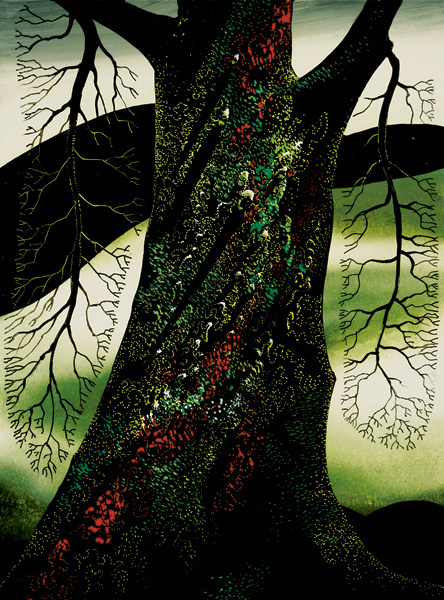
© Jack Kruf (2019) Climate change [fine art print, 1/1, sold]. Tilburg: private collection.

Following the Sustainable Development Goals, climate change is despite Covid-19 not forgotten. More so, the last is seen by scientists, managers and experts as an omen what we can expect when we keep disrupting the Earth ecosystem. Goal 13 is Climate Action: Take urgent action to combat climate change and its impacts. This goal has 5 targets:

    • Strengthen resilience and adaptive capacity to climate-related hazards and natural disasters in all countries.
    • Integrate climate change measures into national policies, strategies and planning.
    • Improve education, awareness-raising and human and institutional capacity on climate change mitigation, adaptation, impact reduction and early warning.
    • Implement the commitment undertaken by developed-country parties to the United Nations Framework Convention on Climate Change to a goal of mobilizing jointly $100 billion annually by 2020 from all sources to address the needs of developing countries in the context of meaningful mitigation actions and transparency on implementation and fully operationalize the Green Climate Fund through its capitalization as soon as possible.
    • Promote mechanisms for raising capacity for effective climate change-related planning and management in least developed countries and small island developing States, including focusing on women, youth and local and marginalized communities.

My personal expression of climate change is displayed above. I imagined the canvas of our world as a chess board with 8*8 fields and estimated the relatively most hurt ecosystems due to this change: coral reef (Pantone Living Coral ) and tropical rainforest (Pantone Forest Biome).

Government (Pantone Imperial Blue) is in fact a tiny spot on the canvas because it is doing not that much to tackle or change course. Most of the public leaders are still in denial or have no idea how to come into action. And we as citizens are not active either and go on with daily life. Storm (Pantone Storm Gray) is coming.

It is a personal art impression – or maybe better: an expression of an impression – to remind me that we will loose precious life if we continue this way. The present myriad of life is still so abundant in coral reefs and tropical rainforests, we can hardly imagine.

If you have seen these ecosystems, you understand and fall in love immediately. And if this happens there is not turning back, you want to protect and want to stay it forever to be there. I am in love, still (it is actually since 1977, the year I met (my) Professor Roelof Oldeman and with him did my first discoveries in and of the forest).

I am a realist, not a pessimist. I hear you thinking. But I did my homework as Wageningen University ecologist. Believe me, storm is coming, if we keep sitting on our hands. Maybe this small (art) expression is a small contribution to one of the targets of this sustainable development goal.

The colours of climate change will change over time. The coral reef and rainforest colours will disappear over time. A lot of gray will come in and the tiny spots of goverment remain insignificant as they are now,  I’m afraid. The driving political landscape is too dominant, too volatile and too focused on short term gains and profits. Remember I am not a pessimist, but a realist. The scientist in me remains. I like the colours. I hope they stay.