Focus

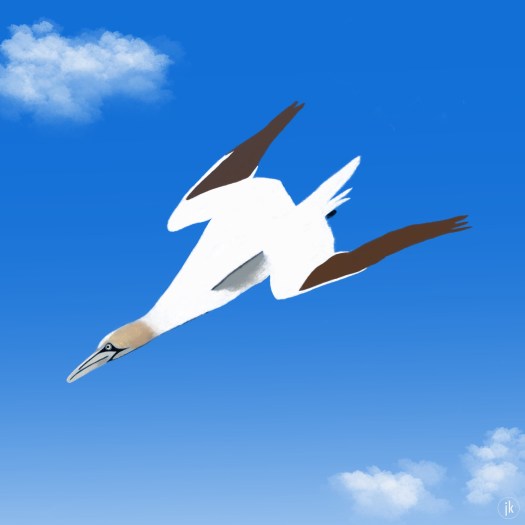
What a beauty it is, the Morus bassinus L.: the Northern gannet or Jan-van-Gent (NL) or Fou de Bassan (F) or Basstölpel (D) or Alcatraz atlåntico (E). I like this diversity of names, showing how differently the bird is perceived in trait, behaviour, habitat or niche.

The scala of names given to one species – this is in fact throughout the complete domains of fauna, flora and fungi – underlines the cultural differences between folk and country. And that is good. It broadens the understanding of the essence of living beings. It is good to have Carl Linnaeus for the common understanding.

This bird dives with a speed up to 190 km/hr into the sea, to catch what it needs to live and prosper. What a focus. And the colours. Oh, those colours. Almost art. I found the drawing from my notebook on our way (with my girls) to Scotland in 2005. On the ferry we witnessed a rain of arrows falling from the sky. Quite a spectacular view.
Bibliography
Kruf, J.P. (2022) Jan-van-Gent [fine art print]. Breda: private collection.

Trees

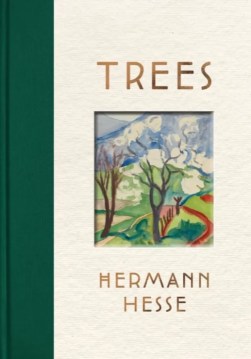
This elegant collection of Hermann Hesse’s essays, poems, and passages on trees, accompanied by thirty-two of his hand-painted watercolor illustrations, reveals his sacred understanding of trees as symbols of transcendence and rebirth, of instinctive growth present in all natural life.

It is published by Kales Press, selected by Volker Michels* and translated from the German by Damion Searls**.

Trees mirrors landscapes as Hesse experienced them, both artistically and spiritually, and reminds us that the life of a tree is also a metaphor for our own life of perseverance, happiness, and purpose. In the author’s words:

“They struggle with all the force of their lives for one thing only: to fulfill themselves according to their own laws . . . Whoever has learned to listen to trees no longer wants to be one. He wants to be nothing except who he is.”

Bibliography

Hesse, H. (2022) Trees: An anthology of writings and paintings. San Diego, California: Kales Press.

*Volker Michels, the world’s foremost authority on Hermann Hesse’s work, manages the Nobel laureate’s literary and artistic estate.

**Damion Searls (personal website) is the translator of more than fifty books, including Hermann Hesse’s Demian, and the recipient of numerous awards.

Picture above is part of Hermann Hesse, Early Spring, 1925.

Recommended

The Day Hermann Hesse Discovered the Meaning of Life in a Tree

Robin

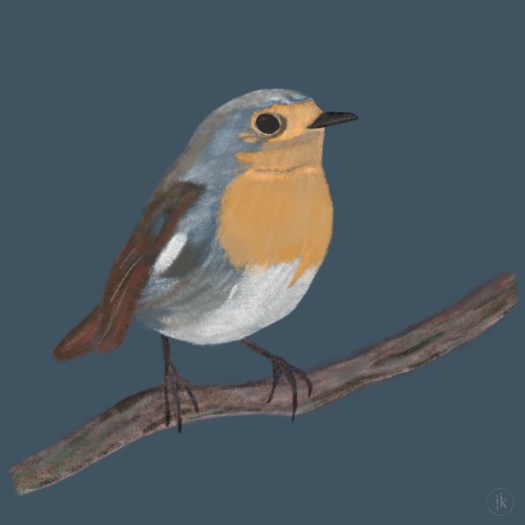
I love this bird. The robin has beautiful colours. Its orange is dazzling. It lives with wife and children (temporary) in our garden. Companions at home. This summer, the family was part of our household. So far from my perspective and my charcoal pencils.

The present news about dictators, autocrats (on all levels) and democratic power houses brings me to another dimension of this bird. It is of course a personal association, in moments becoming a metaphor.

From ecological point of view the robin is relevant in the food chain. Itself it is a fierceless predator of insects and worms. Hm. Defends its territory with all its focus and effort. It does all what is necessary for that.

I recognise this behaviour in the world of power and influence (as Machiavelli described the world of ‘politics’), reading through today’s headlines – in all sizes, forms and capacities.

What helps in my idea, is the fact that the robin (and with all associations attached) is eaten by owls (wisest of all), buzzards (honest birds), hawks (masters of the wood) and falcons (actors of balance). The circle of life is hard but gives hope. I still love this bird.

Bibliography

Kruf, J.P. (2022) Robin [fine art print]. Breda: private collection.

Playful Wind

© Jack Kruf (2019) Playful Wind [fine art print, open edition]. Breda: Private collection.

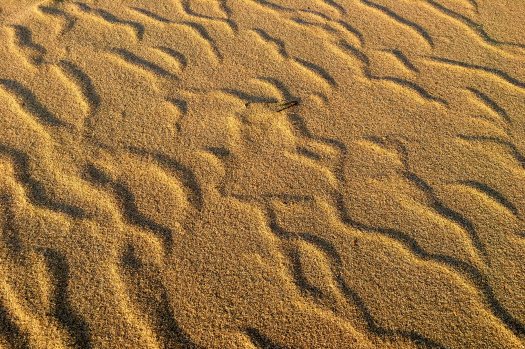
The wind can be playful in etching the sand on the beach. A natural pattern emerged here, which by the way, says not a lot about the wind, but also about the sand.

In fact, this is a symbolic picture of how organisations and, on a larger scale, even cities can be (trans)formed, sculpted, moulded, and even created by this combination of external and environmental factors on one hand and its own internal strengths and weaknesses (in the palette of behaviour, grip, power, robustness, resilience and diversity) of itself on the other hand.

Here, the emerging pattern has become the natural result of a sand and wind carried out realisation after the SWOT analysis. The result is what was possible. The wind and the sand come to their own expressions. No human or Artificial Intelligence is needed for true art expressions of Mother Nature.

Nu ga ik er eens op uit

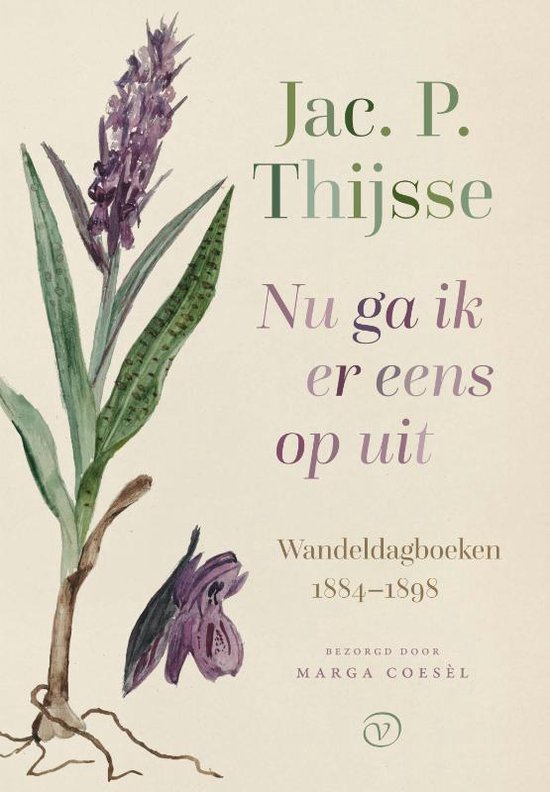
De natuurkenner Jac. P. Thijsse (1865‒1945) geldt als een fenomeen. Behalve als voorvechter van de natuurbescherming in Nederland werd hij beroemd dankzij de Verkade-albums, die bedoeld waren het grote publiek de liefde voor de natuur bij te brengen. Dat Thijsse ook een dagboek bijhield, is echter nauwelijks bekend.

Nu ga ik er eens op uit bevat de twee oudste en boeiendste dagboekdelen, die de jaren 1884‒1887 en 1894‒1898 beslaan. Thijsse is dan als jonge onderwijzer werkzaam in Amsterdam en vult zijn vrije tijd met lange wandelingen, nabij en in de stad, de Kennemerduinen, maar ook tussen Amsterdam en het Gooi.

De dagboeken van Thijsse zijn echte natuurdagboeken. Anders dan een ‘gewoon’ dagboek, gaan ze niet over de dagelijkse beslommeringen, maar over allerlei planten en het doen en laten van de dieren die Thijsse observeerde tijdens zijn wandelingen. Zijn observaties vulde hij aan met prachtige schetsen en opmerkingen over het weer en het omringende landschap.

Met Nu ga ik er eens op uit verschijnen de oudste natuurdagboeken van Nederland voor het eerst. Deze uitgave is zeer rijk geïllustreerd met Thijsses eigen tekeningen, en met facsimile’s van schitterend kleurenmateriaal uit later werk, gedetailleerde kaarten van de Kennemerduinen, het Vondelpark en andere geliefde plekken.