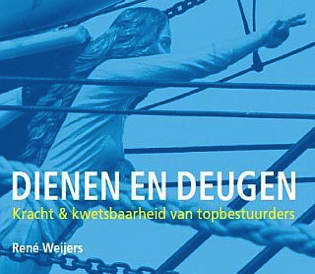
Public steward or steward of the public domain? Who at the end is taking care for our society as a whole? Bringing balance between the political world (according Machiavelli the domain of power and influence’), society, the natural environment, relevant public values, science, media and business.
Is it the system of human society itself, democratic or not, functioning or not, which is actual self-governing? Or maybe is it the King as steward, guarding us, and not being part of the political system. Can the popularity of Kings and Queens (still) be explained by the fact that we actually are in serious need for a steward which is guarding and guiding? Or are they a sublimation of our own personal feelings about lack of security and safety in the big world?
Etymology
In old English stiward, stigweard means “house guardian,” from stig “hall, pen” + weard “guard.” So meaning “overseer of workmen”, attested from c.1300. The sense of “officer on a ship in charge of provisions and meals” is first recorded mid-15c.; extended to trains 1906.
A steward was the title of a class of high officers of the state in early England and Scotland, hence meaning “one who manages affairs of an estate on behalf of his employer” (late 14c.). The term developed during centuries, step by step, from the level of household to that of the public domain. What emerges here is the fact that government should not only deliver products, services, enforce rules, collect taxes and making regulations but also act as a steward. Taking care. Guardian angel.
Religion & Thought
The thoughts of stewardship are embedded in many beliefs, ideologies, philosophies and religions such as Buddhism, Catholicism, Gaia, Hinduism, Humanism, Islamism, Judaism, Protestantism and many more. According David Horrell the oldest and most influential source for the idea that humans are meant to be stewards of the earth is the Bible, and in particular the opening chapters of the book of Genesis.
Government
Within public governance though – scientifically as well as from practitioners perspective – stewardship is still in development, and compared with the “world of” beliefs, ideologies, philosophies and religions relatively small and not well elaborated. The role ofsteward– to underline the focus and feeling of this role I use the term public steward – has been defined by several institutions and scientists as one of the roles of government. This role can only be carried out by government, many say.
O yes, government. That is actually us. At least in the democratic societies. With as main – and generally acknowledged – considerations the attainment of the society’s (public) values and quality of life for citizens. I would like to add nature here. This mostly is not considered as part, rather as environmental aspect of society and defined as our natural environment. Nature though is a core in the conceptions of stewardship, but in public governance still in the background. Of course it is linked somehow with sustainability, but not truly embedded in the processes and architecture of public governance.
Embedding
In my view stewardship is not that easy to embed in governing the public domain – at least being a challenging task – due to the always rich palette of stakes, views, levels of government, political parties, beliefs, backgrounds and interests. Society is complex, stewardship in this regard a true profession.
What could be helpful is a more holistic approach (by government) of any issue, topic, plan or project; actually meaning placing strategies and policies in the larger perspective of total of values of the public area domain, for instance a city, as a whole. Not always easy zooming out from direct interests, stakes and clientele.
Moreover it becomes more and more important that also citizens and organisations living, working and acting within the public domain, truly embed the values of the public domain (as a whole) in their own behaviour. And act in the spirit of.
Ownership
Public stewardship contains on one hand a balanced holistic approach of public matters and a behaviour of citizens expressing their responsibility for the bigger picture on the other hand. So not only government as steward – with for cities Mayor, Aldermen and The City Council in the lead. No, everyone of us can be (and should be, but maybe that is too normative) a public steward and act from the responsibility for the mainframe of discussed, confirmed and decided public values.
Necessity
For example a clean city (as chosen, confirmed and decided public value). Many cities have expressed this public value in their strategies and policy plan, that is way I use it as an example – is not only the guarding task of government, but in my view for everyone of us, regardless our background, belief or personal circumstances. Public Stewardship can in my view be very successful (not only as concept but as truly effective way of governing) when government and citizens act as one (the essence of democracy). For that a more holistic approach of public governance is desirable. No it is more than that: necessary.
Picture: © Jack Kruf, Hondarribia, Catalunya
Maatschappelijke zorgplicht: verplicht
Het duurt té lang voor ondernemingen welzijn boven winst gaan stellen. Daarom moet een maatschappelijke zorgplicht in de wet verankerd worden. Dat zegt Leen Paape in zijn afscheidsrede als hoogleraar Corporate Governance bij Nyenrode.
Als je om je heen kijkt, zie je dat in Nederland de samenleving aan veel kanten vastloopt, aldus Paape. Energie, klimaat, zorg, onderwijs, de Belastingdienst, stikstof, pfas, migratie. En dan komt daar nog de oorlog in Oekraïne bij. Hij ziet dat er fundamentele veranderingen nodig zijn.
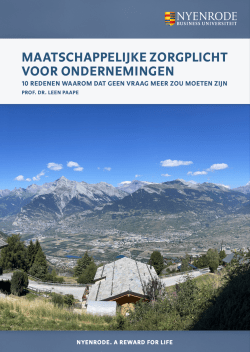
“Nyenrode is in 1946 opgericht om het land te helpen opbouwen. Die mooie missie hebben we als samenleving goed gerealiseerd. Maar ergens zijn we zo zelfvoldaan van het pad afgeraakt dat er nu heel veel is vastgelopen”, zegt Paape. “Wat ik zou willen zien, is dat bedrijven hun maatschappelijke verantwoordelijkheid méér gaan nemen. Ondernemingen krijgen hun license to operate van ons als maatschappij. In mijn ogen hebben ze daarom een maatschappelijke zorgplicht: zorgen voor maatschappelijk welzijn op de lange termijn. En daarbij rekening houden met ieders belangen. En als je dat echt goed wilt doen, kijk je 7 generaties vooruit.”
We hebben nieuwe doelen nodig
“Sinds de Tweede Wereldoorlog staan groei en winst centraal in ons denken. Nu we zien dat er zo veel vastloopt, is het tijd om opnieuw te kijken naar onze doelen. Want die bepalen wat we doen. Zo lang het doel uitsluitend winst maken is, komen de bestrijding van de klimaatcrisis en het tegengaan van polarisatie in de samenleving minder goed van de grond. Dit gesprek moeten we dus wel met elkaar aangaan! Als samenleving zullen we niet meer uitsluitend moeten streven naar welvaart in materiële zin, maar juist ook naar welzijn. Dat is ingewikkeld. Maar ook nodig!”
Paape noemt 10 redenen voor de zorgplicht:
-
- De veranderende opvattingen over de wet geven richting (wat mij betreft).
- Daar komen dan nog codes, (internationale) regelgeving en akkoorden bij.
- Values en principes van uw eigen onderneming spreken al voor zich, nietwaar?
- Stakeholders hebben er niet alleen recht op, ze vragen er ook om.
- De theorie wijst u – inmiddels – ook in de goede richting.
- Institutionele beleggers verlangen het van u.
- Gerechtelijke uitspraken onderstrepen het belang ook nog eens.
- De filosofen en de ethiek verlichten uw pad.
- Spirituele en religieuze overwegingen geven u wellicht nog het op één na laatste zetje.
- Last but not least, u heeft vast dierbaren die u een betere wereld gunt, toch?
“Voor wie schreef ik deze afscheidsrede eigenlijk? In het begin zei ik dat het voor ondernemers bedoeld was. Mijn conclusie nu is dat ik het vooral schrijf voor de politiek. Maar ja die politiek, dat zijn wij allen. We moeten dus ook nu in gezamenlijkheid de trom slaan en zorgen dat de politiek beweegt. Die trom heb ik dan nu geslagen door langs 10 overwegingen redenen aan te voeren waarom die maatschappelijke zorgplicht een onvermijdelijkheid is en dus ook geen vraag meer zou mogen zijn.”
– Leen Paape, Nyenrode, 8 december 2022
The Forest and Sustainability
The Commission welcomes the provisional political agreement just reached between the European Parliament and the Council on an EU Regulation on deforestation-free supply chains.
Once adopted and applied, the new law will ensure that a set of key goods placed on the EU market will no longer contribute to deforestation and forest degradation in the EU and elsewhere in the world.
Since the EU is a major economy and consumer of these commodities, this step will help stop a significant share of global deforestation and forest degradation, in turn reducing greenhouse gas emissions and biodiversity loss.
This major agreement comes just before the start of the milestone Conference on Biodiversity (COP15) which is set to define protection goals for nature for decades to come.
Explanation
Apart from timber, the products concerned are cocoa, coffee, soy, palm oil, beef and rubber. Derived products such as leather, chocolate, furniture, paper and charcoal will also be banned if they contribute to deforestation, the European Commission said in a statement.
Products will be classified as banned if they come from land deforested after December 2020. Traders will have to start proving that the products are deforestation-free and legal. Importers must be able to provide “precise geographical information on agricultural land” to show where raw materials come from.
If the rules are not followed, member states must impose sanctions. The commission says the list of goods covered by the directive is regularly reviewed and updated. This takes into account new data, such as changing deforestation patterns.
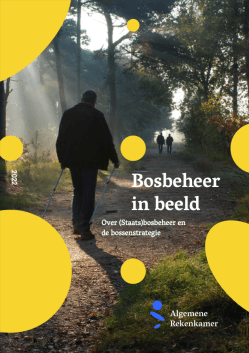
Bosbeheer in beeld
Ongewis of bosbeheer beoogde resultaten op termijn levert. Het beeld dat de laatste jaren is ontstaan dat Staatsbosbeheer overal in het land grootschalig bossen kapt, is onjuist. Onderzoek van de Algemene Rekenkamer wijst uit dat Staatsbosbeheer niet meer oogst dan er bijgroeit. Maar of de werkwijze van de grootste bosbeheerder van Nederland en andere boseigenaren op lange termijn de beoogde resultaten geeft, is echter op landelijk niveau onbekend.
Het rapport Bosbeheer in Beeld gaat over (Staats)bosbeheer en bossenstrategie. Het beeld dat de laatste jaren is ontstaan dat Staatsbosbeheer overal in het land grootschalig bossen kapt, is onjuist.
Onderzoek van de Algemene Rekenkamer wijst uit dat Staatsbosbeheer niet meer oogst dan er bijgroeit. Maar of de werkwijze van de grootste bosbeheerder van Nederland en andere boseigenaren op lange termijn de beoogde resultaten geeft, is echter op landelijk niveau onbekend.
“De landelijke bossenstrategie, door de rijksoverheid en provincies gezamenlijk in 2020 ondertekend, vereist landelijk 10 % meer bos op termijn. Die doelstelling wordt waarschijnlijk niet gehaald. Sinds 2013 verdwijnt er namelijk bij alle natuurbeheerders opgeteld meer bos in Nederland dan dat er aangeplant wordt. Er is ruim 6.000 hectare bos minder dan bij de start van de bossenstrategie.”
De conclusies laten zich samenvatten in de volgende punten:
-
- Aantal gestelde doelen van de strategie worden niet gehaald.
- Er is geen centraal inzicht in de resultaten van het bosbeheer.
- Er is geen transparante afweging.
- Er zijn geen financiële prikkels die aanzetten tot meer houtkap.
- Art is geen garantie voor duurzaam bosbeheer.
De conclusies liegen er niet om. De gedane aanbevelingen zijn boterzacht en vooruitschuivend. Nadere informatie en afspraken moet gemaakt worden. Inderdaad. Had dat niet al gemoeten dan?
De bossenstrategie faalt. En dat is niet goed. Helemaal niet.
Structuurverandering publiek domein
Jürgen Habermas
In dit klassieke werk uit 1962 en in het Nederlands uitgegeven in 2015 door Boom Uitgevers, ontwikkelt Duits filosoof en socioloog Jürgen Habermas* zijn theorie over het publieke domein. Volgens Habermas is dit een ruimte waarbinnen rationele discussies kunnen worden gevoerd, vrij van inmenging van de staat en andere dwingende machten.

Habermas beschrijft hoe deze sfeer zijn opgang deed in de bourgeoismaatschappij van de achttiende eeuw, toen koffiehuizen en salons het toneel werden van discussies over sociale en politieke vraagstukken.
De druk van het kapitalisme, massamedia en het totalitarisme op het publieke domein
In latere jaren kwam het publieke domein steeds verder onder druk te staan door de toegenomen rol van het kapitalisme en de daarbij horende nadruk op het eigenbelang. Vervolgens werd het steeds verder uitgehold door de massamedia, de opkomst van het totalitarisme de vervagende grenzen tussen het private en de staat.
Van pessimisme naar oplossing
Na het ontvouwen van dit pessimistische perspectief biedt Habermas de weg naar een oplossing: een machtsvrije wijze van communicatie. De structuurverandering van het publieke domein staat daarmee aan de basis van zijn latere, invloedrijke werk.
Bibliografie
Habermas, J. (2015) De structuurverandering van het publieke domein. Amsterdam: Boom Uitgevers (Oorspronkelijke titel: Strukturwandel der Öffentlichkeit. Vertaling: Jabik Veenbaas)
Afbeelding van de auteur: door Wolfram Huke, http://wolframhuke.de – Verplaatst vanaf en.wikipedia naar Commons door ojs., CC BY-SA 3.0, https://commons.wikimedia.org/w/index.php?curid=3546577
*Jürgen Habermas is een van de laatste nog levende grote filosofen van de twintigste eeuw. Hij is emeritus hoogleraar filosofie in Frankfurt en ontving vele prijzen, waaronder in 2013 de Erasmusprijs.
Zijn werk is internationaal van grote invloed en wordt door een breed publiek gelezen. Bij Uitgeverij Boom verschenen van zijn hand De nieuwe onoverzichtelijkheid (1989), Geloven en weten (2009). Een toekomst voor Europa (2013) en Over democratie (2020).